14+ Smart Garage Toy Storage Ideas That Actually Work for Busy Homes
Keeping toys in the garage sounds simple until the space fills up with bikes balls scooters and broken bins. After working with family homes for over twenty years I have learned that garage toy storage only works when it fits real life not picture perfect setups. The goal is not beauty alone. The goal is easy access quick cleanup and toys that last longer because they are stored right.
This guide shares smart garage toy storage ideas that are proven to work for growing families. Each idea focuses on space safety and daily habits. Everything is written in simple clear language so anyone can use it without stress. These ideas help you take control of the garage and keep it that way.
1 Smart Wall Mounted Toy Zones
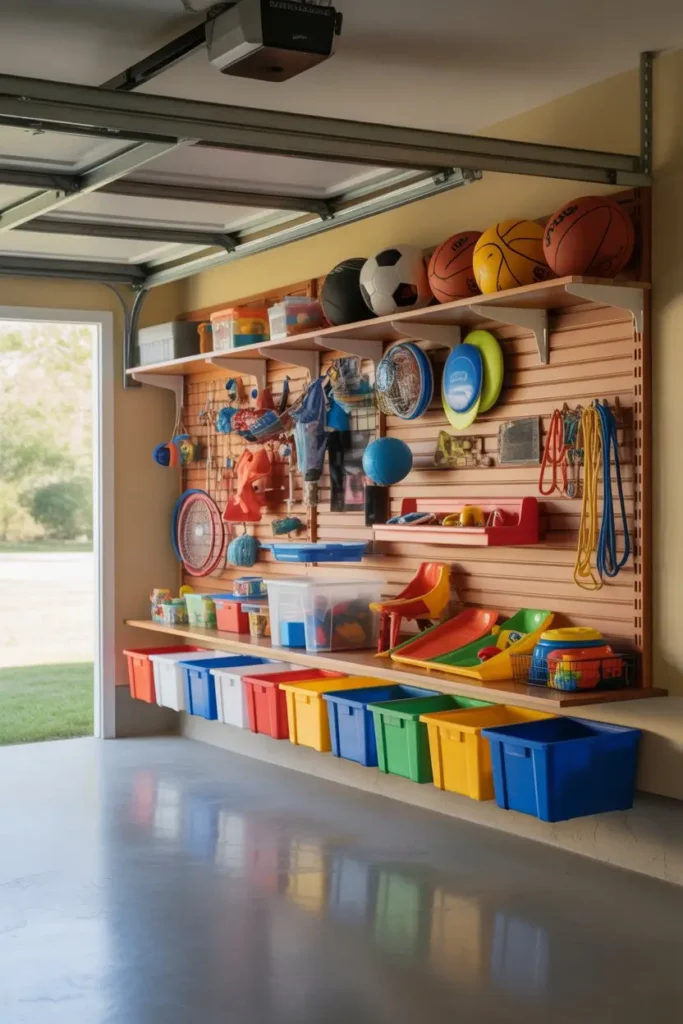
Wall mounted storage is one of the smartest ways to reclaim garage space. When toys sit on the floor they spread fast and become a tripping risk. Using the wall keeps the floor open and makes cleanup easier for kids.
A wall zone works best when toys are grouped by type. Sports gear goes in one area while outdoor toys live in another. Hooks bins and shallow shelves can all live together on the same wall. Kids learn where things go because they see it every day. This builds habits without effort.
Wall zones also grow with your family. As toys change the hooks and bins can move. This makes the system last for years instead of one season.
2 Rolling Storage Carts for Daily Play Toys
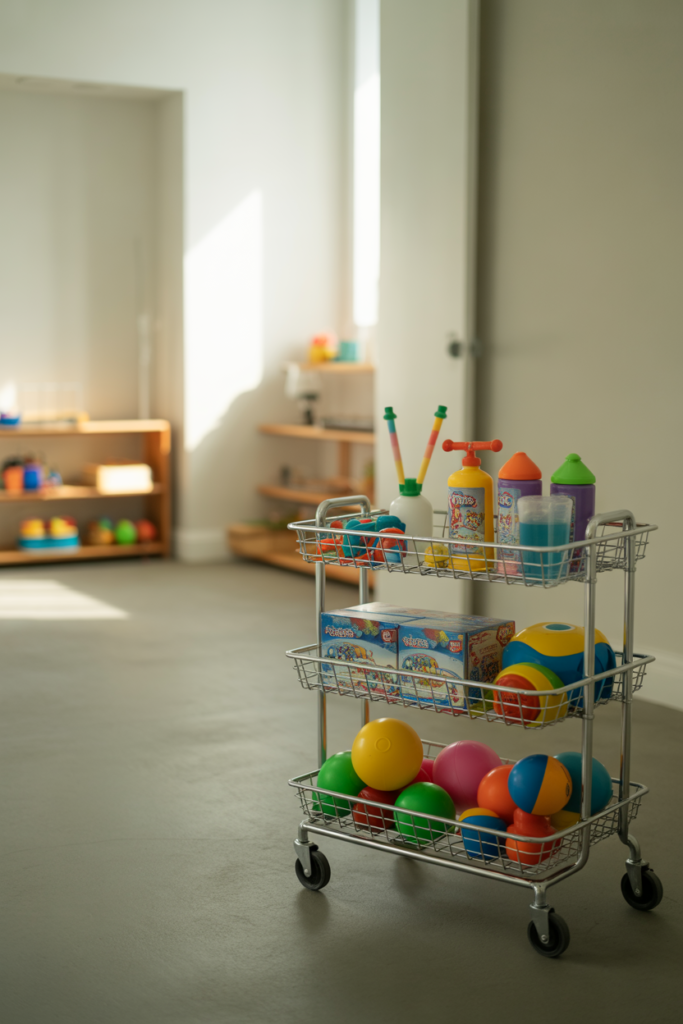
Rolling carts solve a big problem. Kids like to play outside then rush back inside. Toys left behind pile up fast. A rolling cart lets everything move together in one trip.
These carts work best for balls chalk bubble sets and ride on accessories. When playtime ends the cart rolls back into place without sorting stress. This keeps cleanup quick and calm.
Clear carts or open wire carts help kids see what belongs inside. When toys are visible kids are more likely to put them away. This small detail makes a big difference long term.
3 Ceiling Storage for Seasonal Toys
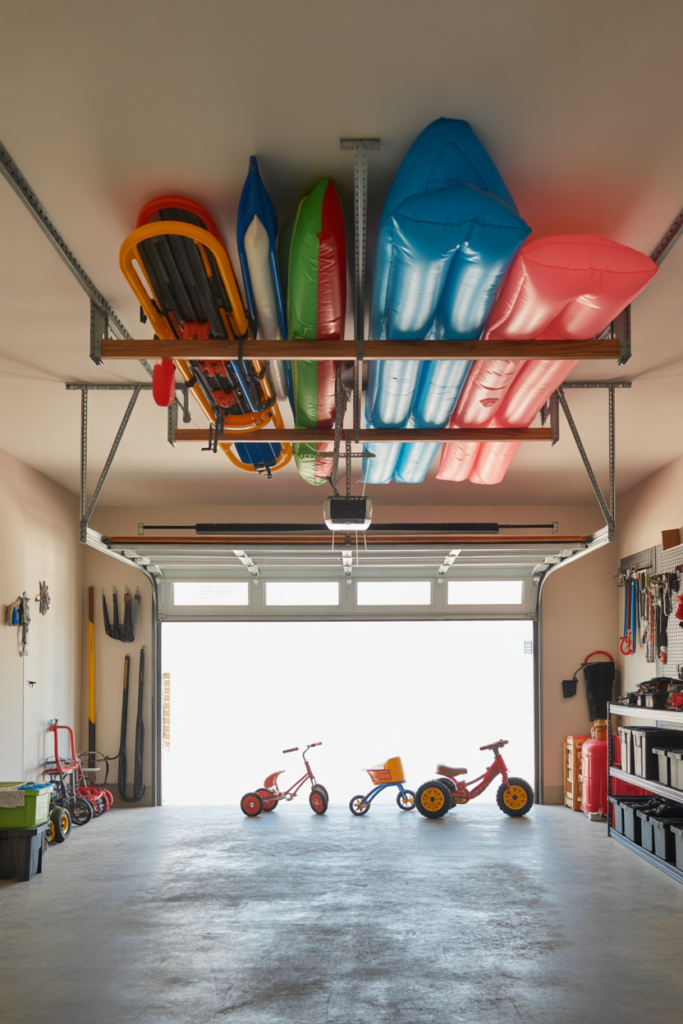
Some toys are not used every day. Snow sleds pool floats and large ride ons take space but only matter part of the year. Ceiling storage keeps these items safe and out of the way.
Strong overhead racks or pulley systems work well for this purpose. Toys stay clean dry and protected from damage. The garage feels bigger right away.
The key is labeling and access. Adults should handle lifting while kids learn when seasonal toys come down. This keeps things safe and organized all year.
4 Open Shelf Systems for Easy Sorting
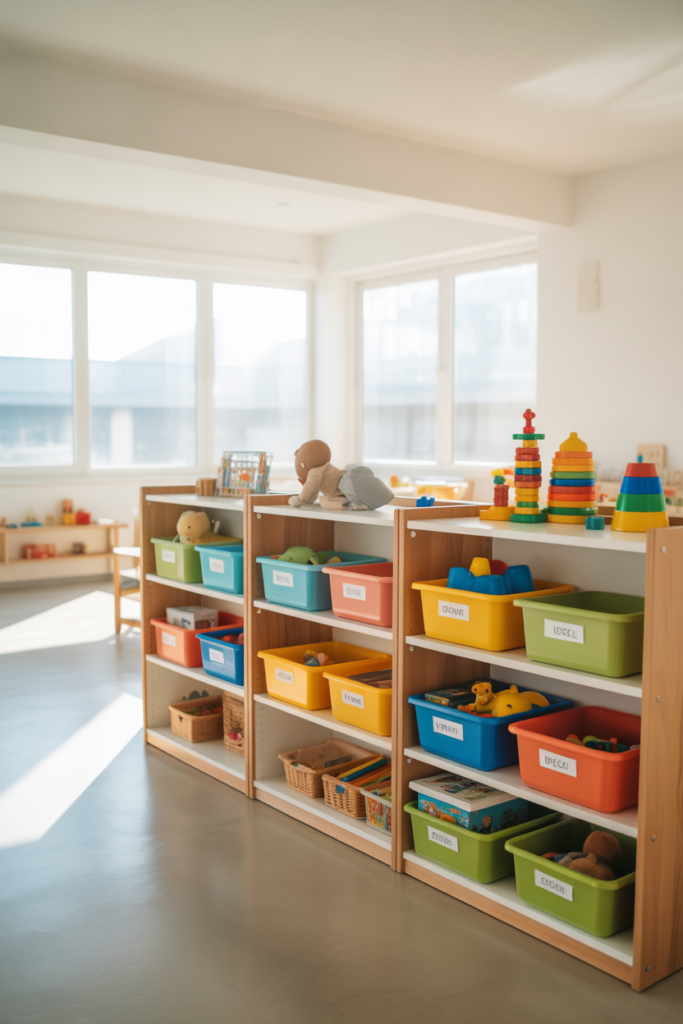
Open shelves are better than closed cabinets for toy storage. Kids can see where items belong and return them without opening doors. This reduces frustration and mess.
Shelves should be low enough for kids to reach. Use bins on shelves to group similar toys together. Each bin becomes a simple home for toys.
Open shelving also helps parents notice broken toys or clutter early. This keeps the system clean instead of overwhelming.
5 Heavy Duty Pegboards for Sports Gear
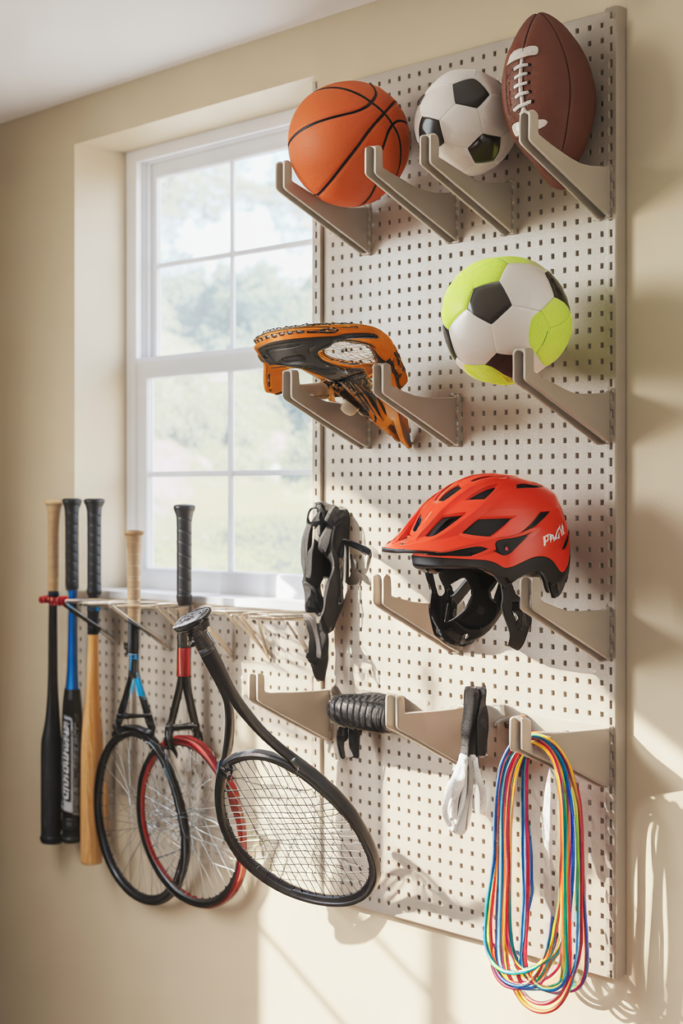
Sports toys come in odd shapes. Pegboards solve this problem better than bins. Balls helmets bats and jump ropes hang neatly and dry faster after use.
Pegboards make great use of vertical space. Hooks can move as gear changes. This keeps storage flexible and long lasting.
When kids see their gear displayed clearly they treat it with more care. This helps toys last longer and saves money over time.
6 Labeled Bin Storage That Kids Can Read
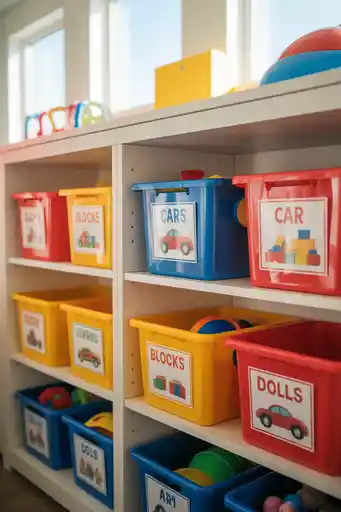
Labels are powerful when done right. Simple words and picture labels help even young kids understand where toys belong. This builds independence and reduces daily cleanup battles.
Bins should be sturdy and easy to pull out. Avoid deep bins that hide toys. Shallow bins work better and prevent dumping.
Labels should stay the same over time. Changing names often confuses kids and breaks habits. Keep it simple and clear.
7 Bike Storage That Saves Floor Space
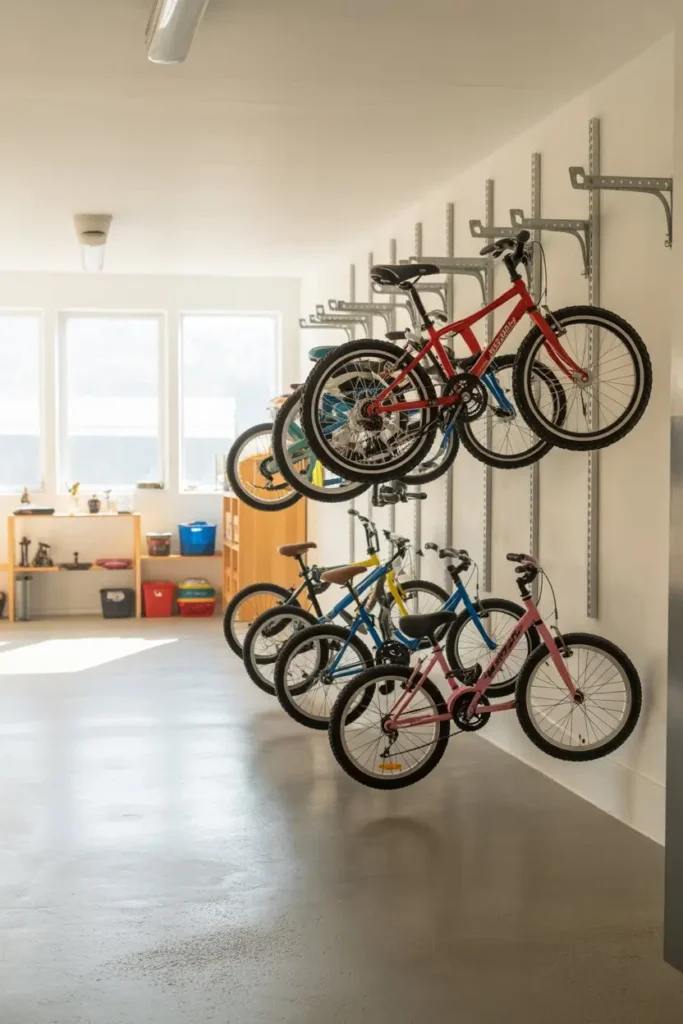
Bikes are often the biggest garage problem. When they sit on the floor they block everything else. Vertical bike storage fixes this instantly.
Wall hooks or bike racks lift bikes off the ground. Kids can learn to hang their own bikes with practice. This keeps the garage open and safe.
Spacing matters here. Leave room so bikes do not tangle. This prevents scratches and frustration during busy mornings.
8 Toy Locker Style Cabinets for Shared Spaces
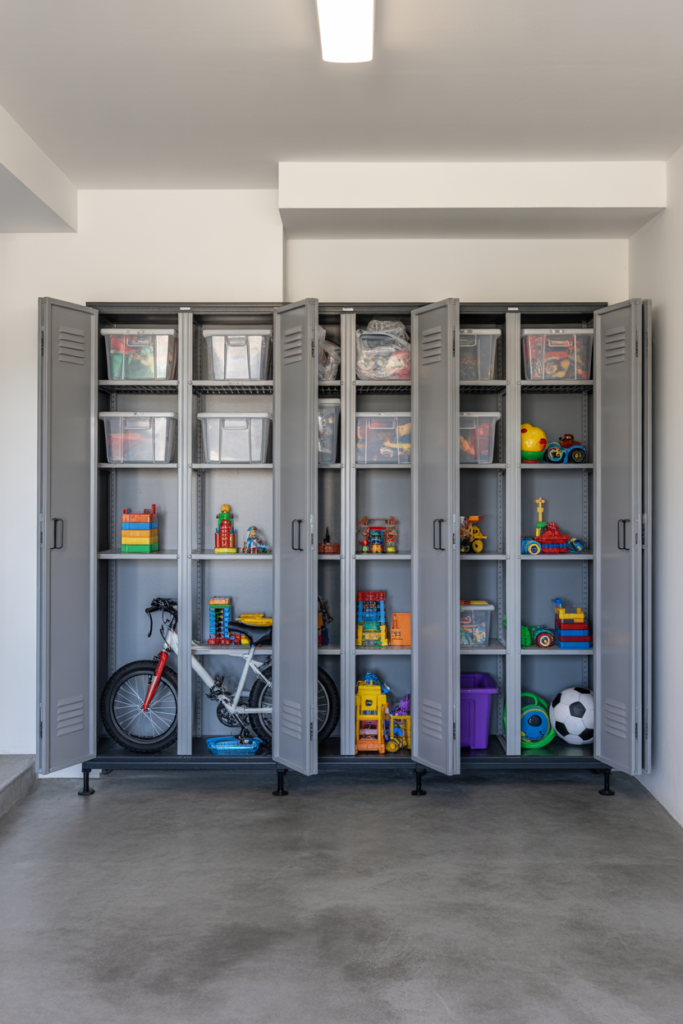
When garages serve many purposes storage needs to look clean. Locker style cabinets keep toys hidden while still organized inside.
These cabinets work well for families who share garage space with cars tools or laundry areas. Inside the cabinet bins and shelves separate toys by child or type.
Lockers also teach responsibility. Each child can have their own section. This reduces arguments and lost toys.
9 Mudroom Style Storage Near the Garage Door
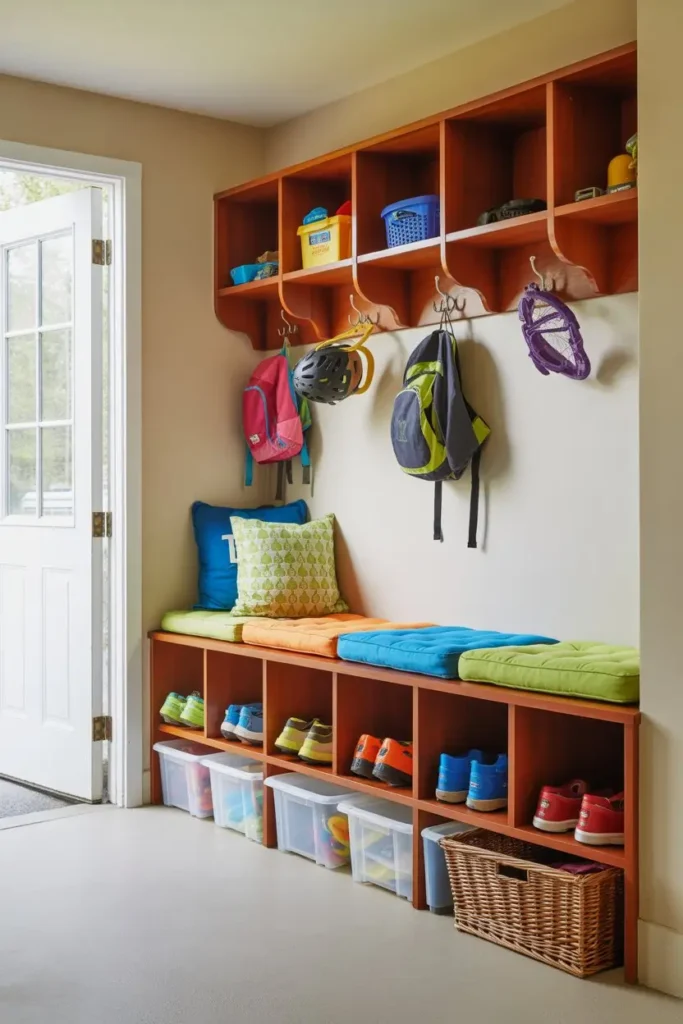
Toy mess often starts at the door. Creating a mudroom style zone near the garage entrance catches toys before they spread.
Benches with cubbies hooks and bins work well here. Kids drop toys right away instead of carrying them inside.
This setup also supports routines. Shoes helmets and outdoor toys all live in one spot. This saves time every day.
10 Stackable Crate Systems That Grow Over Time
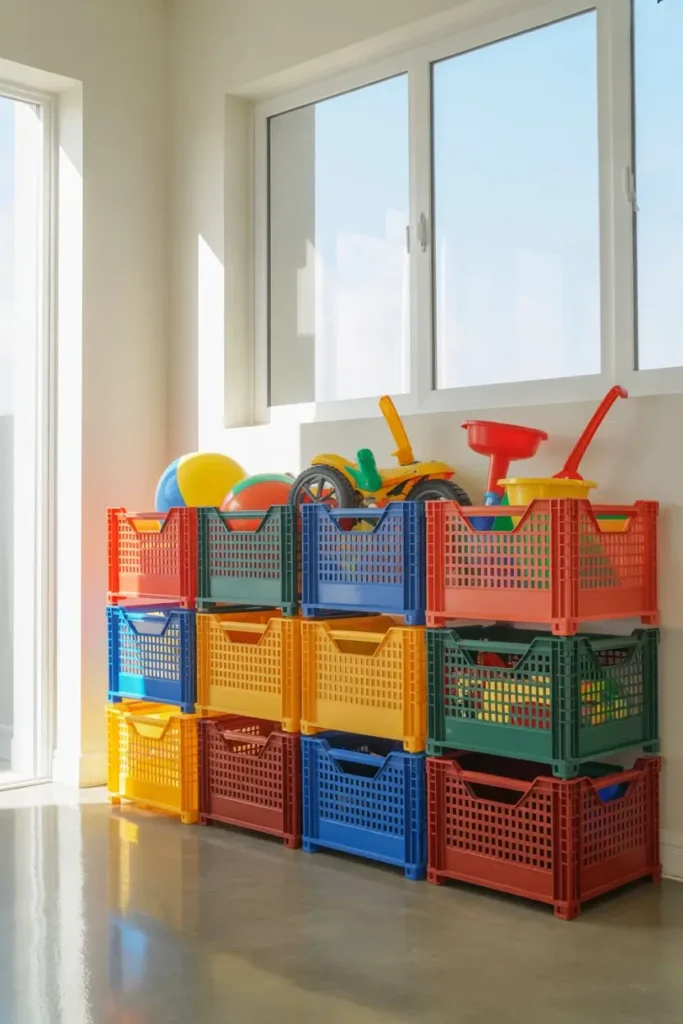
Stackable crates offer flexible storage that adapts as toy collections change. These systems can start small and grow as needed.
Crates work well for balls sand toys and ride on parts. When toys change crates can move or stack differently.
The open design helps kids see and choose toys easily. This keeps play fun and cleanup simple.
11 Clear Storage for Quick Toy Checks
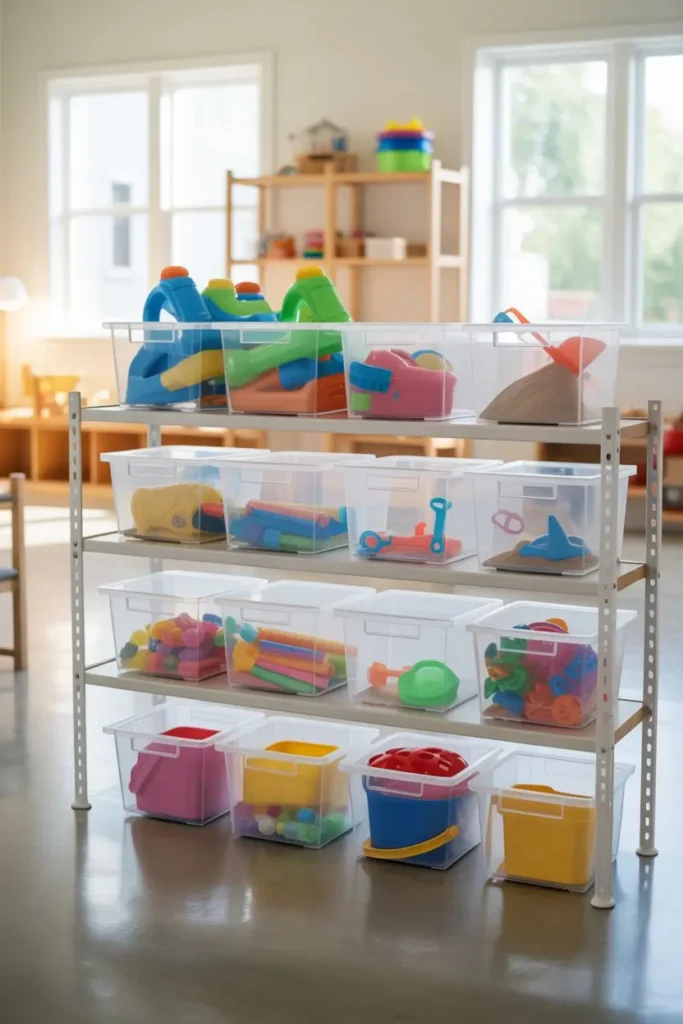
Clear storage bins help parents and kids know what they own. No more digging or buying duplicates.
These bins work best for small outdoor toys like water guns chalk or play tools. Clear sides reduce mess and stress.
When kids can see toys they remember to use them. This prevents toys from being forgotten and wasted.
12 Corner Storage That Uses Lost Space
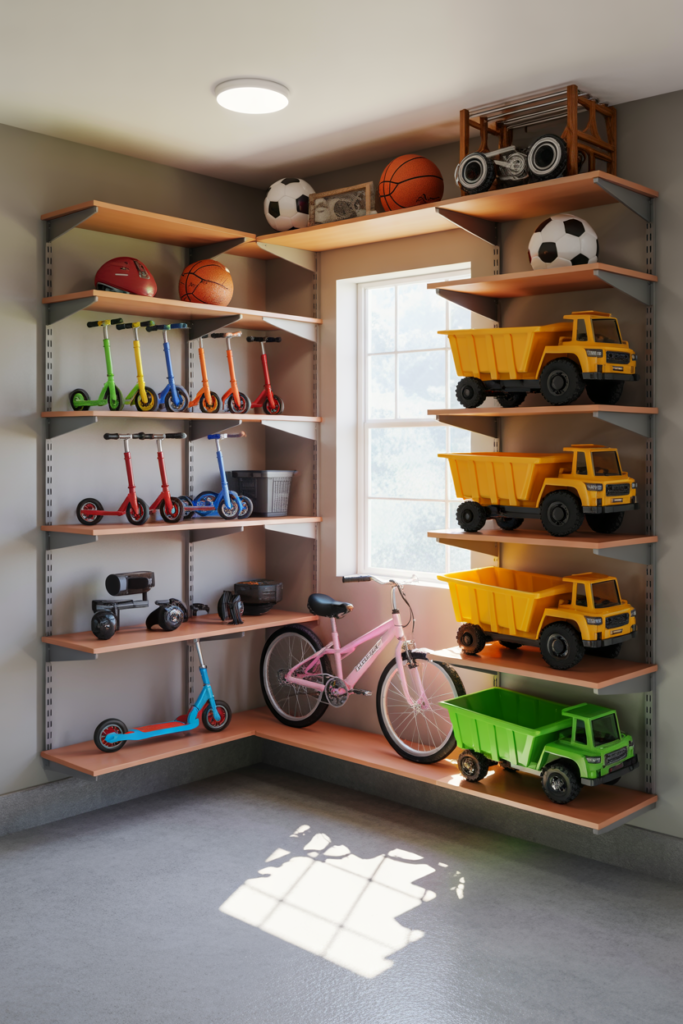
Corners are often wasted space in garages. Corner shelves or angled racks turn unused areas into storage gold.
These spots work well for awkward toys like scooters or large trucks. Keeping them off walkways improves safety.
Using corners also makes the garage feel balanced and open. Every inch works harder without feeling crowded.
13 Repair and Donation Station for Toy Rotation
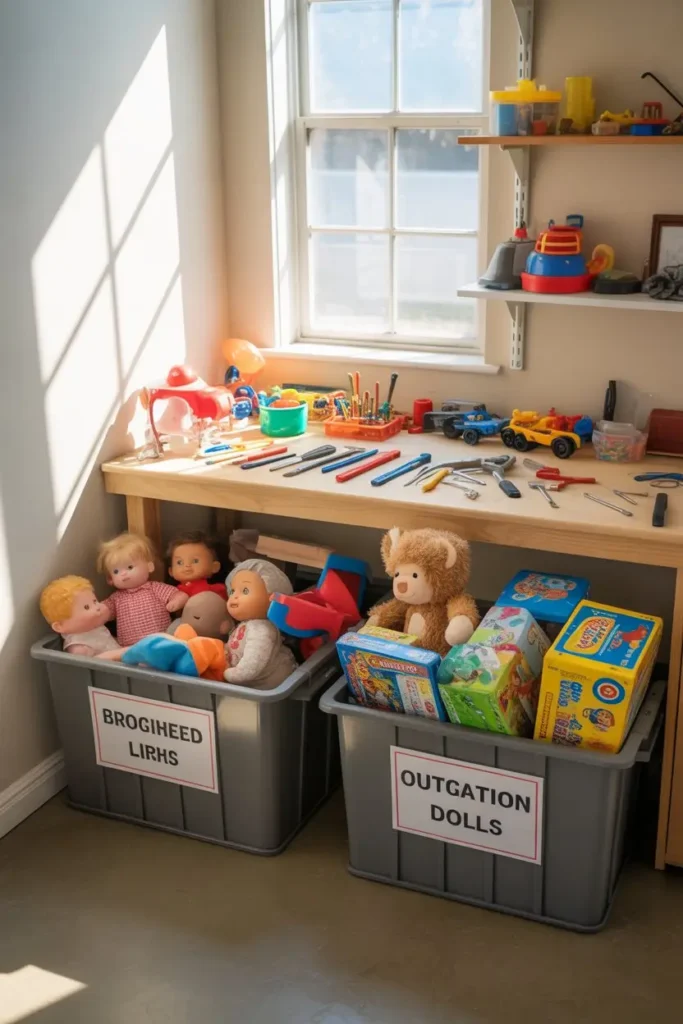
Smart storage includes planning for toy rotation. A small station for broken or unused toys keeps clutter from returning.
This area should include a bin for repairs and a bin for donation. When toys break or get outgrown they move here instead of back into storage.
Regular reviews keep the garage organized long term. This habit matters more than any bin or shelf.
14 Weather Safe Storage for Outdoor Toys
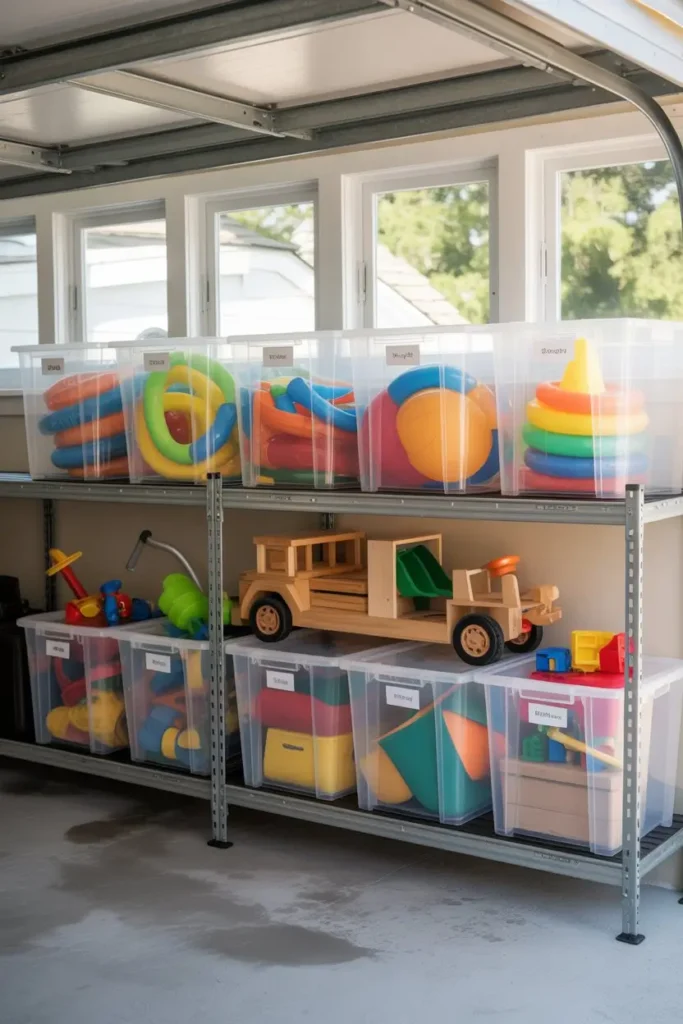
Garages can get damp or dusty. Weather safe storage protects toys and extends their life.
Sealed bins raised off the floor work best for water toys and wooden items. This prevents mold and damage.
Teaching kids to dry toys before storing them also helps. This simple habit saves money and keeps toys safe.
15 Multi Purpose Storage That Grows With Kids
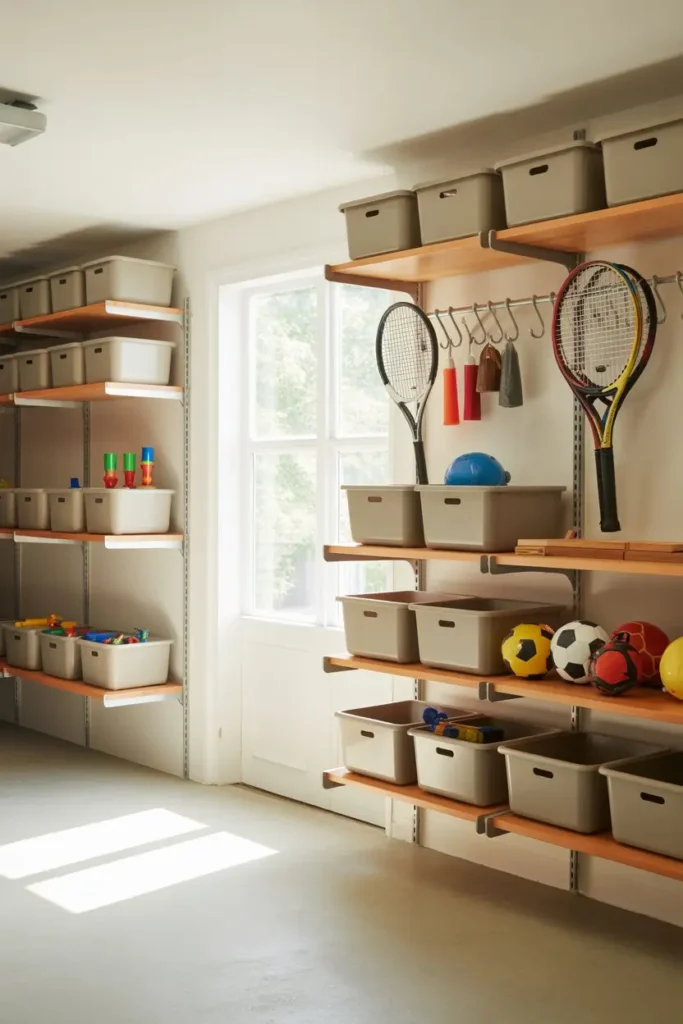
The smartest garage toy storage ideas work beyond early childhood. Storage should adapt as toys change into sports gear tools or hobby items.
Neutral bins adjustable shelves and flexible hooks allow easy updates. This avoids full storage overhauls later.
Thinking long term saves effort and cost. A smart system today supports future needs without stress.
Final Thought
Garage toy storage is not about perfection. It is about making daily life easier for families. The best systems match how kids play and how parents live. When storage is simple visible and flexible it works naturally. These smart garage toy storage ideas focus on real habits not trends. Start small stay consistent and let the system grow with your family.