15+ Practical Wheelchair Accessible Kitchen Ideas for Comfort and Style That Truly Work
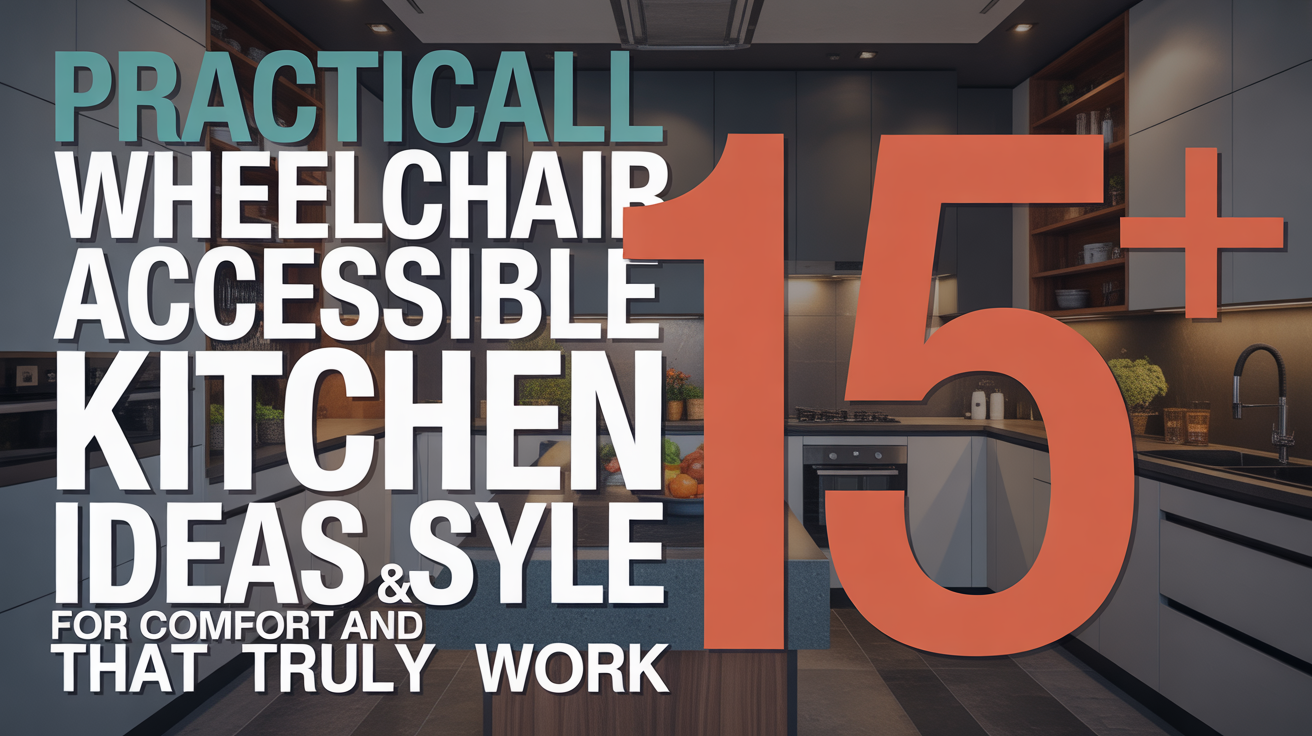
A kitchen should feel easy safe and welcoming. After more than twenty years of working with real homes and real families I know that a wheelchair accessible kitchen is not about limits. It is about freedom comfort and smart design that fits daily life. The best kitchens do not look medical or cold. They feel warm useful and beautiful while making every task smoother.
This guide focuses on wheelchair accessible kitchen ideas that improve movement reach safety and style at the same time. Every idea here is based on lived experience not theory. Each section gives real value you can use in a new build or a small remodel. The goal is to help you cook clean and enjoy your kitchen with confidence every day.
1. Smart Open Floor Layouts That Support Easy Movement
An open kitchen layout is the base of true accessibility. A wheelchair needs room to turn without effort. Tight corners and narrow paths cause stress and slow every task. A well planned layout keeps clear space between counters islands and appliances.
This does not mean removing all structure. It means placing cabinets and work areas with purpose. When the floor stays open the kitchen feels calm and balanced. Movement becomes natural instead of forced. This layout also makes the kitchen feel larger and brighter which improves comfort for everyone in the home.
2. Lowered Countertops That Feel Natural to Use

Standard counter height does not work for wheelchair users. Lowered countertops allow hands to rest comfortably while chopping mixing or serving. The key is choosing a height that fits the main user not a generic rule.
A good lowered counter blends into the kitchen design. It should match the rest of the surfaces so it looks intentional not added later. When done right it improves posture reduces strain and makes cooking enjoyable again.
3. Roll Under Sink Designs That Reduce Daily Strain
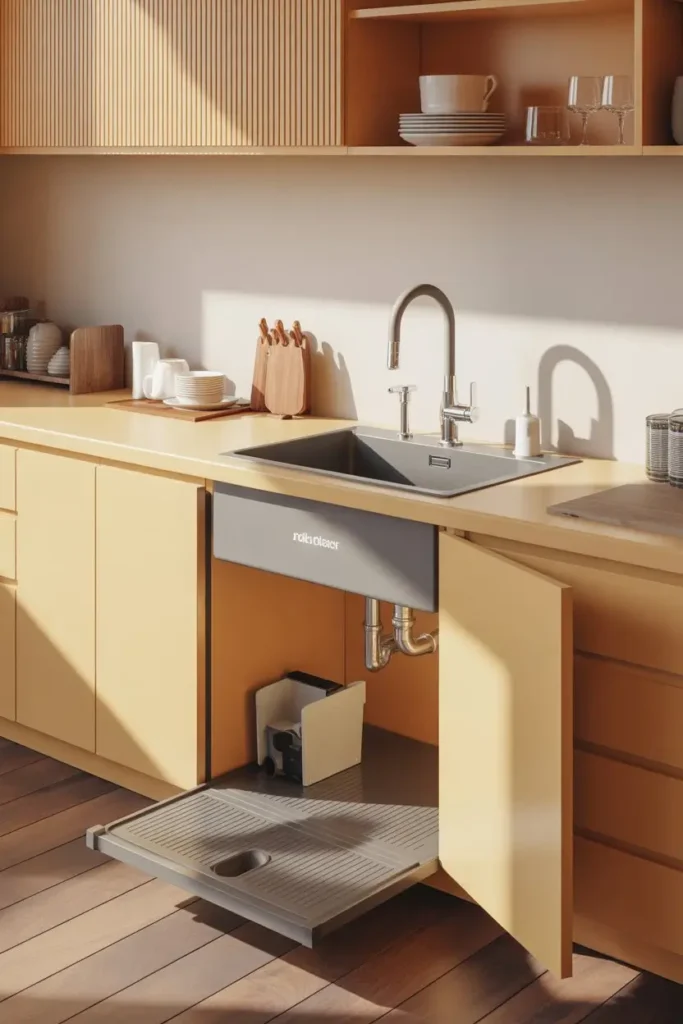
A roll under sink is one of the most important wheelchair accessible kitchen ideas. It allows the chair to move close without leaning forward. This reduces back and shoulder pain during daily use.
The space below the sink should stay open with protected pipes to avoid burns. A shallow sink works best since it keeps reach short. This setup makes washing dishes and hands simple and safe while keeping the kitchen clean and modern.
4. Easy Reach Storage That Keeps Items Within Arm Length

Storage should support daily habits not fight them. Cabinets that sit too high become unused space. Easy reach storage keeps dishes tools and food within a safe arm range.
Pull down shelves sliding racks and open cubbies work well. They allow access without stretching or twisting. This design saves time and energy and helps keep the kitchen organized without clutter.
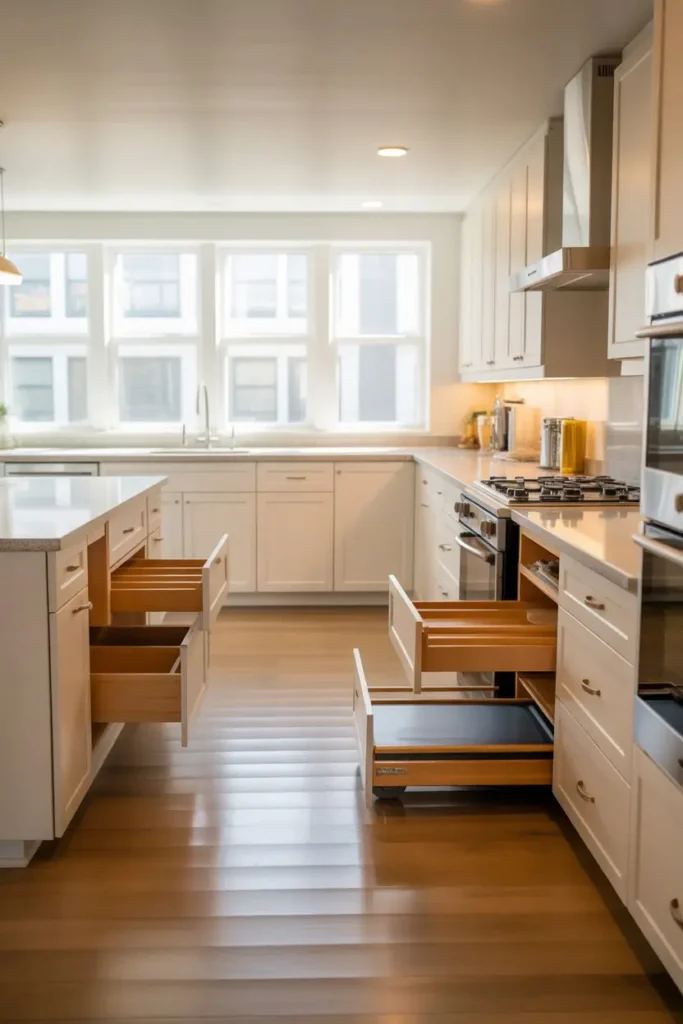
5. Pull Out Drawers That Replace Deep Cabinets
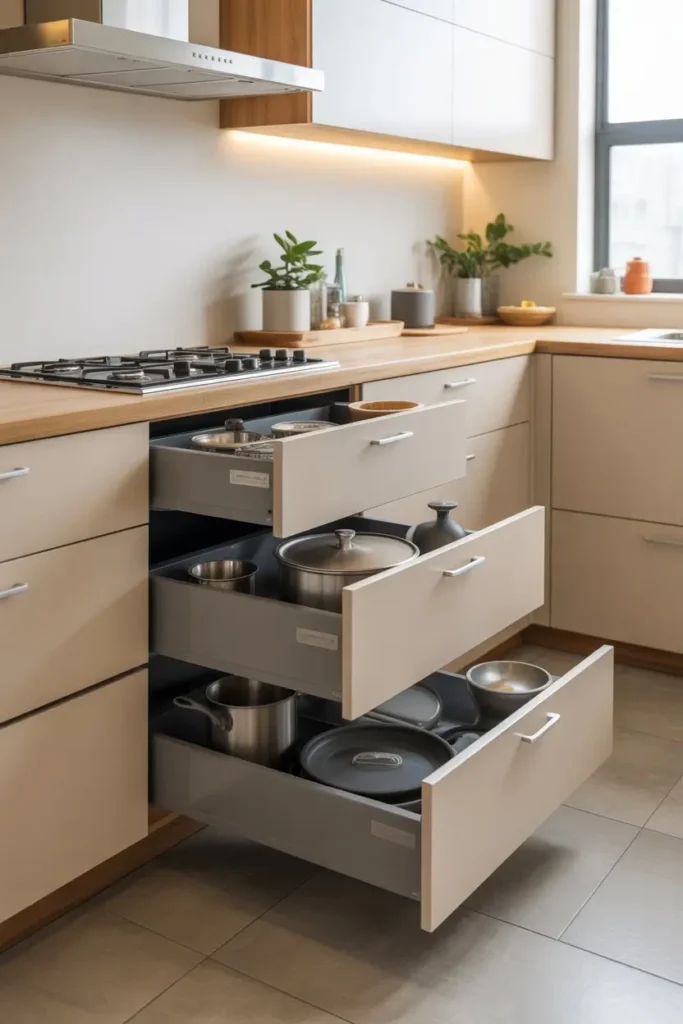
Deep base cabinets are hard to use from a wheelchair. Pull out drawers change everything. They bring the contents forward so nothing is hidden in the back.
These drawers are ideal for pots pans dry food and even small appliances. They reduce bending and searching. Over time they make the kitchen feel calmer because everything has a clear place.
6. Wheelchair Friendly Kitchen Islands With Knee Space
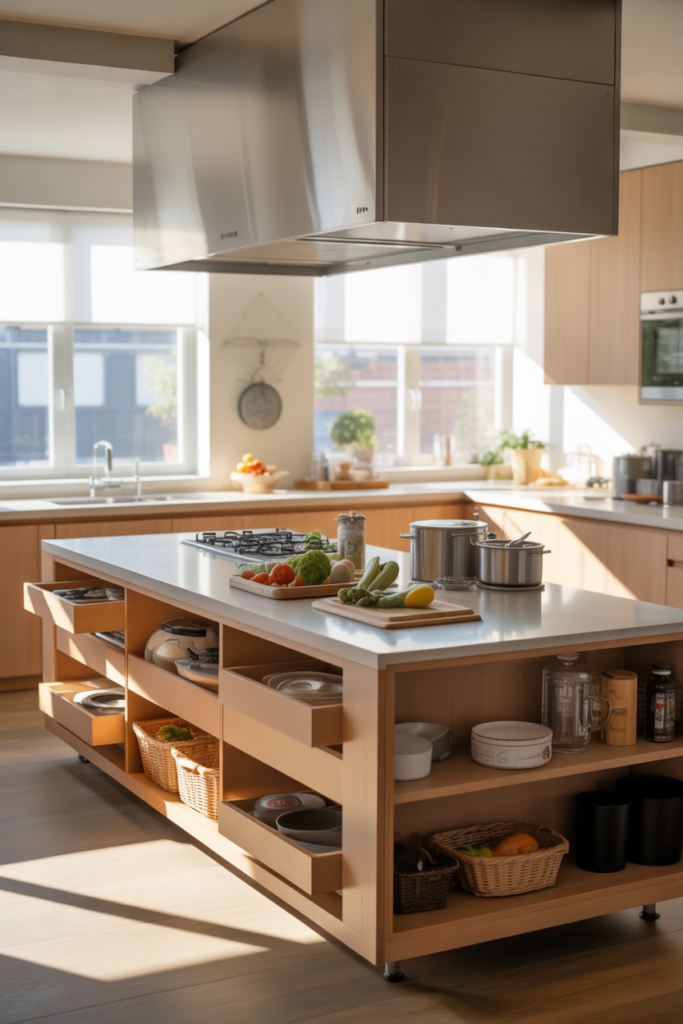
A kitchen island can be accessible and stylish at the same time. The key is leaving open space underneath for knees and feet. This allows close access for prep meals or casual dining.
An island like this becomes a social spot not a barrier. It supports cooking together and makes the kitchen feel inclusive. When designed well it blends with the rest of the space without standing out.
7. Side Opening Ovens for Safer Cooking
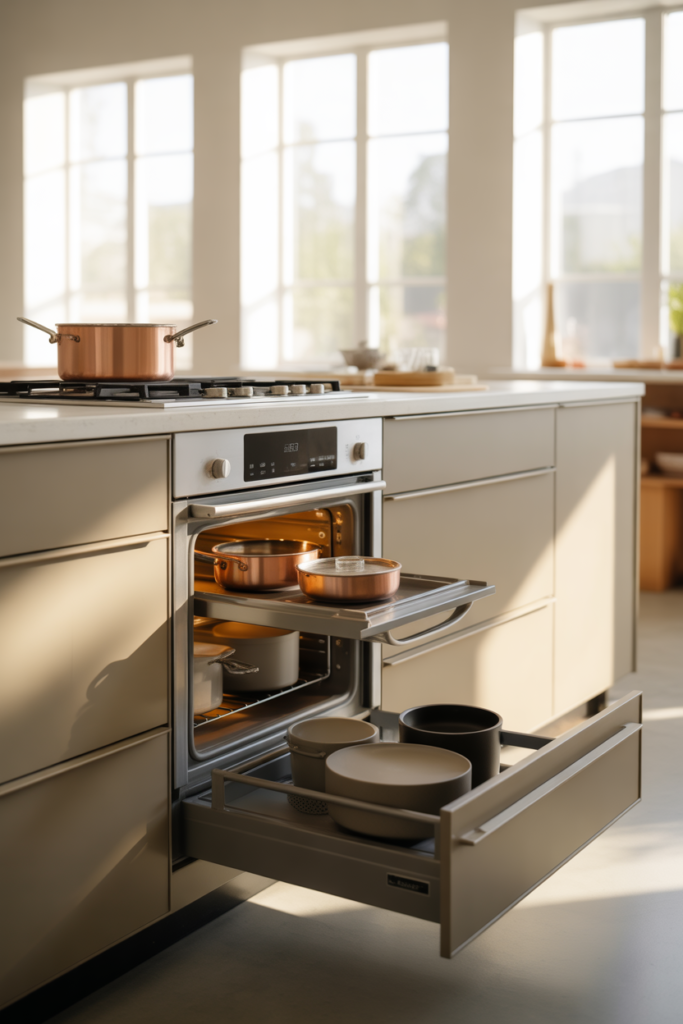
Traditional ovens can be risky for wheelchair users. Side opening ovens allow easy access without reaching over a hot door. This reduces the risk of burns and spills.
These ovens can be placed at a lower height for better visibility. Cooking becomes safer and more controlled. This change alone can restore confidence in daily meal prep.
8. Front Control Cooktops That Improve Safety
Cooktops with front controls keep hands away from heat. This is a major safety upgrade for wheelchair accessible kitchens. Controls should be easy to grip and read.
Induction cooktops are a strong option since they stay cool around the pan. This reduces burn risk and makes cleanup simple. Safety and ease come together in a clean modern look.
9. Drawer Style Dishwashers That Save Energy
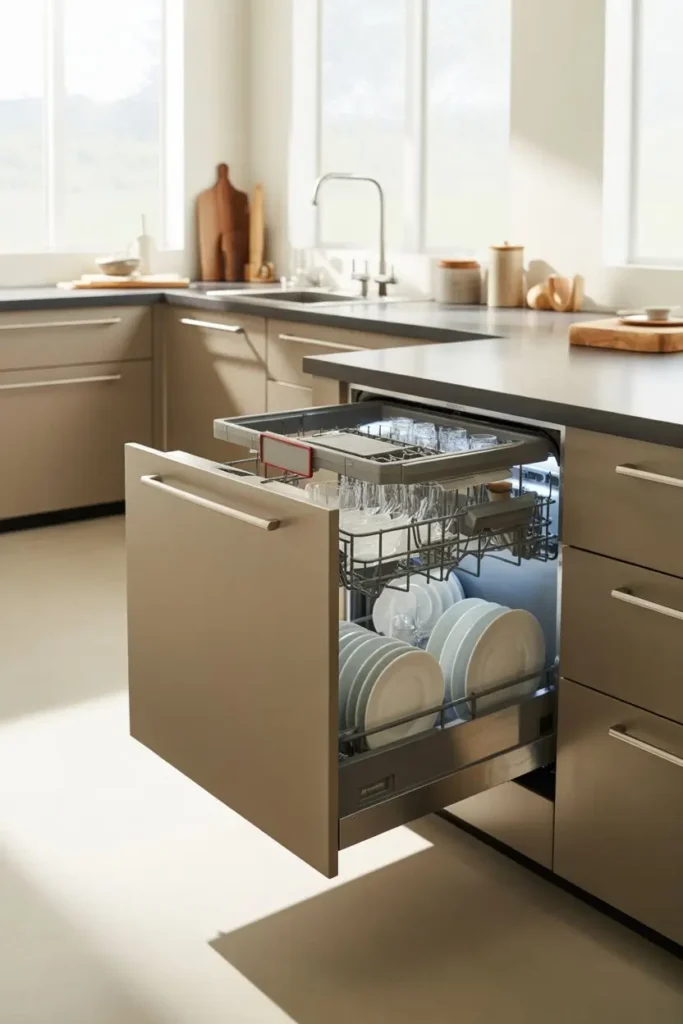
Drawer dishwashers are easier to load from a seated position. They slide out smoothly and sit at a comfortable height. This avoids bending and lifting heavy racks.
These dishwashers also use less water for small loads. They are practical efficient and fit well in accessible kitchen designs. Over time they reduce fatigue and speed up cleanup.
10. Touchless Faucets for Better Control
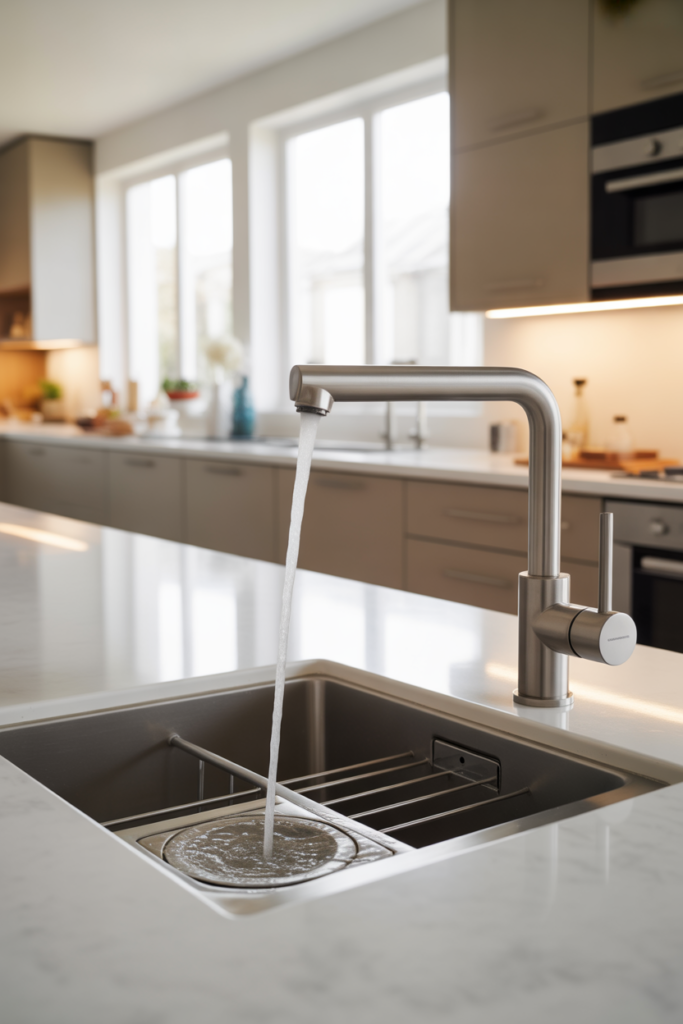
Touchless faucets are not just modern gadgets. They offer real benefits for wheelchair users. Turning water on and off without gripping helps those with limited hand strength.
These faucets keep the sink cleaner and reduce water waste. They are simple to use and fit into both modern and classic kitchens without effort.
11. Slip Resistant Flooring That Feels Stable
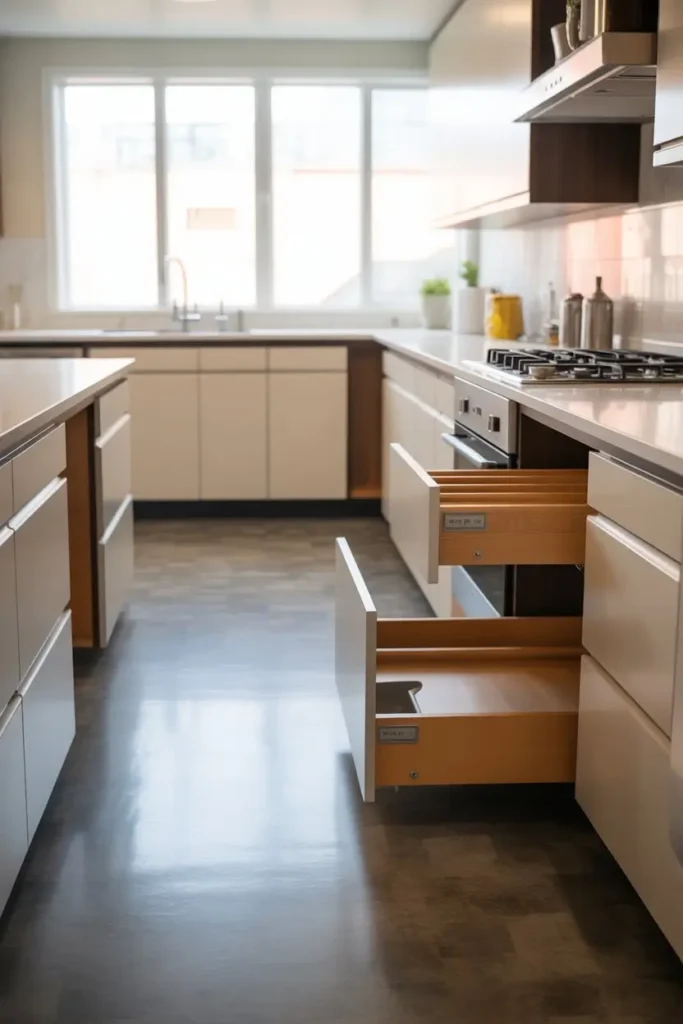
Flooring plays a big role in safety. Smooth glossy floors can be dangerous. Slip resistant flooring provides grip while still looking stylish.
Materials like textured vinyl cork or matte tile work well. They support smooth rolling while reducing the risk of slips. A stable floor brings peace of mind every time you move through the kitchen.
12. Clear Lighting That Improves Visibility
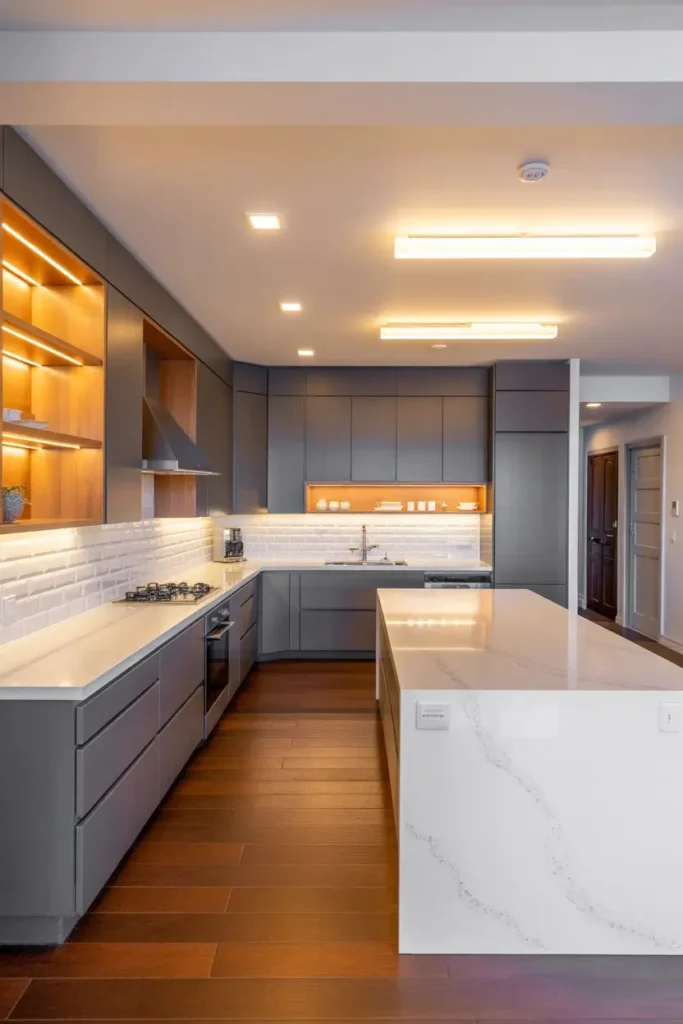
Good lighting is essential for safety and comfort. Shadows make tasks harder and increase risk. A wheelchair accessible kitchen should have even lighting across all work areas.
Under cabinet lights help with prep while ceiling lights brighten the whole room. Clear lighting reduces eye strain and makes the kitchen feel warm and welcoming.
13. Accessible Pantry Designs That Keep Food Visible
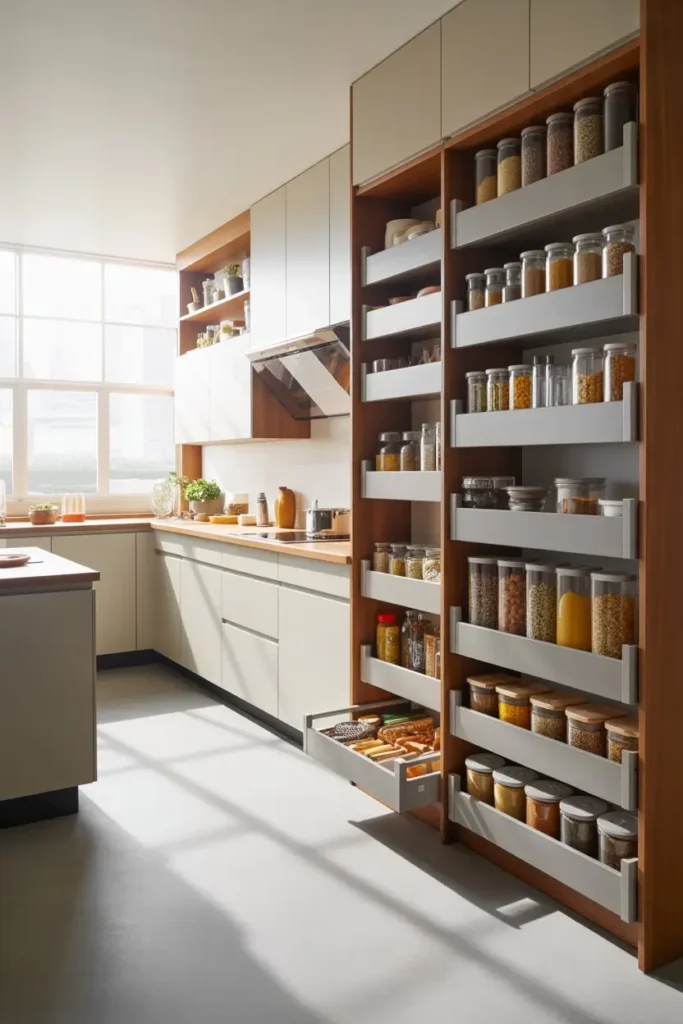
A pantry should not feel like a deep cave. Accessible pantries use pull out shelves and shallow depth. This keeps food visible and easy to reach.
Labels and clear containers help too. When you can see what you have meal planning becomes easier. This design supports independence and reduces frustration.
14. Rounded Counter Edges for Comfort and Safety
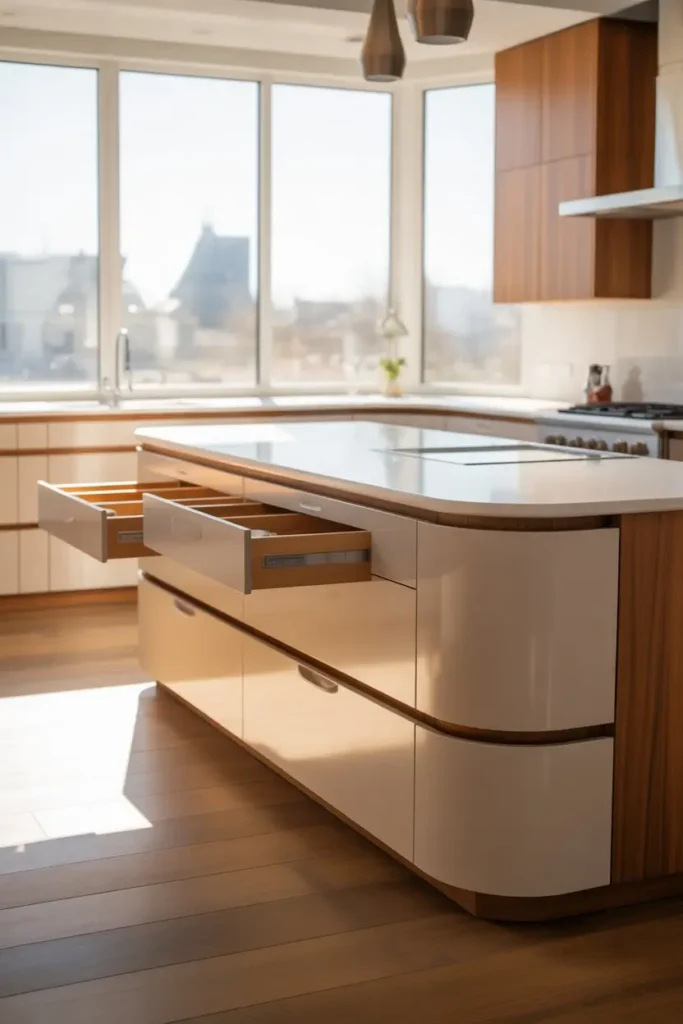
Sharp edges can cause injury during daily movement. Rounded counter edges are safer and more comfortable. They reduce pressure on arms and hands.
This small detail makes a big difference over time. It also gives the kitchen a softer more welcoming feel that works with many design styles.
15. Lever Handles That Are Easy to Use
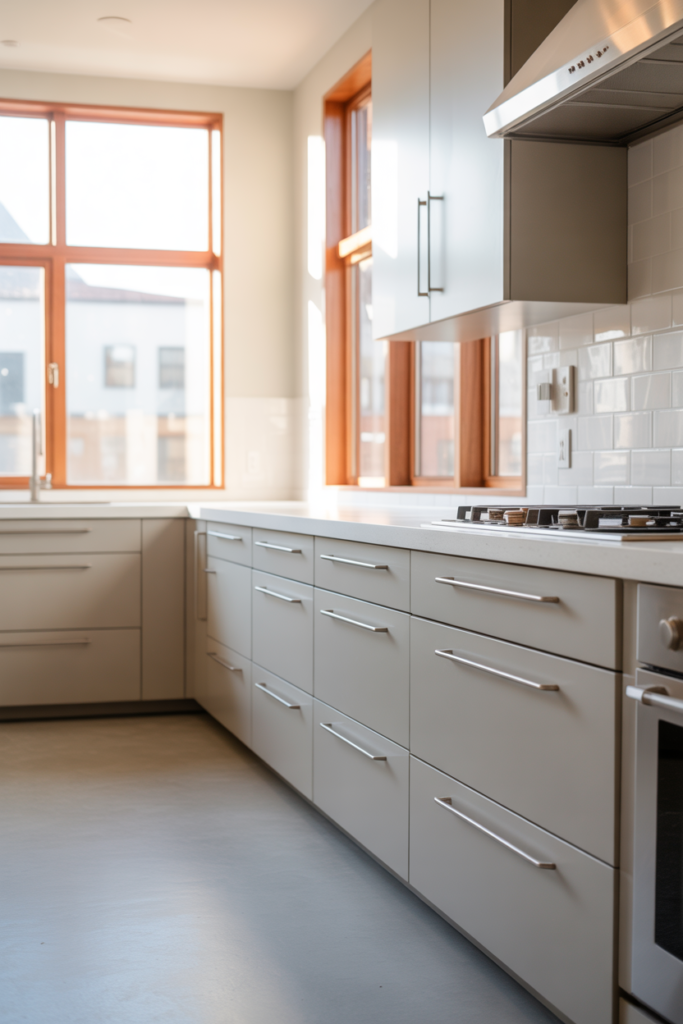
Lever handles work better than knobs for wheelchair users. They need less grip and wrist movement. This helps those with limited hand strength or joint pain.
Using lever handles across cabinets and doors creates a consistent feel. It improves ease of use without changing the look of the kitchen.
16. Personalized Layouts That Match Real Life Routines

The most important idea is personalization. No two wheelchair users have the same needs. A kitchen should match daily habits cooking style and body reach.
This means adjusting heights spacing and storage based on real use. When a kitchen fits the person it serves it becomes a place of comfort not challenge. This is where true accessibility lives.
FAQs
Final Thought
A wheelchair accessible kitchen is about dignity ease and joy. It should support daily life without drawing attention to limitations. When designed with care it becomes a space where cooking feels natural and movement feels free. These wheelchair accessible kitchen ideas are not trends. They are proven solutions shaped by real homes and real needs. When comfort and style work together the kitchen becomes a place everyone can enjoy every single day.