14+ Closet Renovation Ideas for Smart & Stylish Storage Solutions
Introduction
A closet is more than a space to store clothes. It is the first place you visit in the morning and the last you see at night. A well-designed closet makes your daily routine smooth, saves time, and adds value to your home. Yet many closets remain messy, cramped, or outdated. After working with homeowners for over two decades, I’ve seen how the right renovation can transform an ordinary storage space into a functional and stylish highlight of the house.
In this guide, we’ll explore 14+ closet renovation ideas that combine design, organization, and practicality. These solutions go beyond surface-level upgrades and dive into details that actually matter. Whether you’re working with a small reach-in closet or a large walk-in, these strategies will help you use every inch wisely.
1. Custom Built-Ins for a Tailored Fit
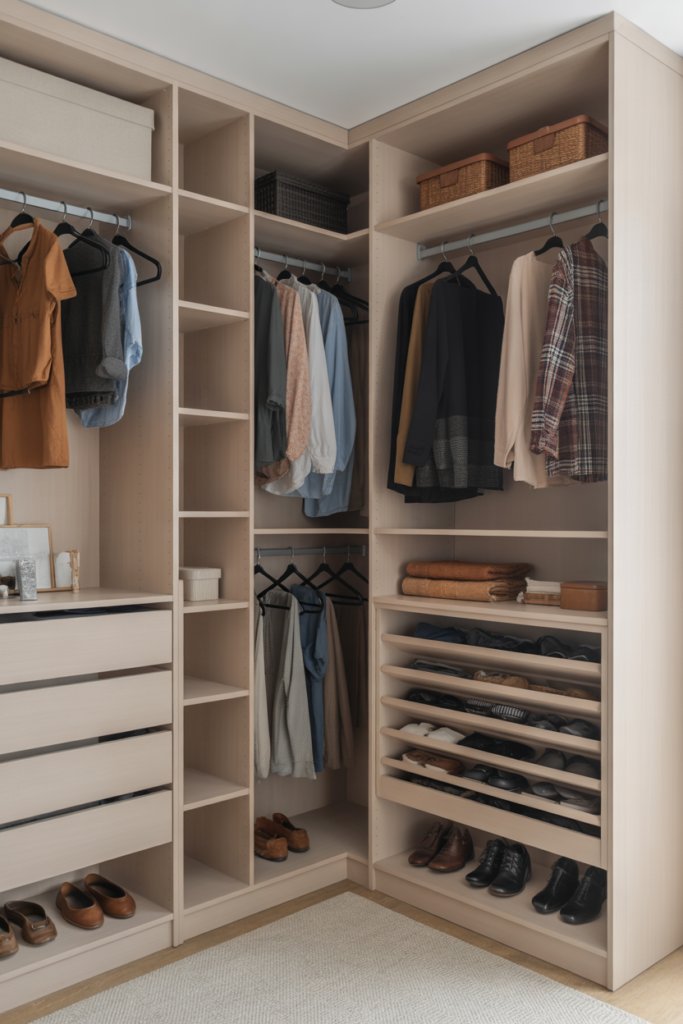
Closet storage is rarely one-size-fits-all. Standard rods and shelves often leave wasted space, especially at the top or bottom. Custom built-ins solve this problem by fitting the closet exactly to your needs. For example, you might install drawers for folded clothes, angled racks for shoes, and double-hang rods for shirts and pants. Custom designs also make better use of corners, often overlooked in stock closets.
The beauty of built-ins lies in flexibility. You can plan the design based on your wardrobe. If you own more dresses than pants, a taller section with single hanging space works best. For those with a large shoe collection, vertical cubbies or slanted shelves display each pair neatly. A custom system not only makes your closet more efficient but also gives it a polished look that feels like it belongs in the home’s architecture.
2. Add Lighting for a Bright and Clear Space
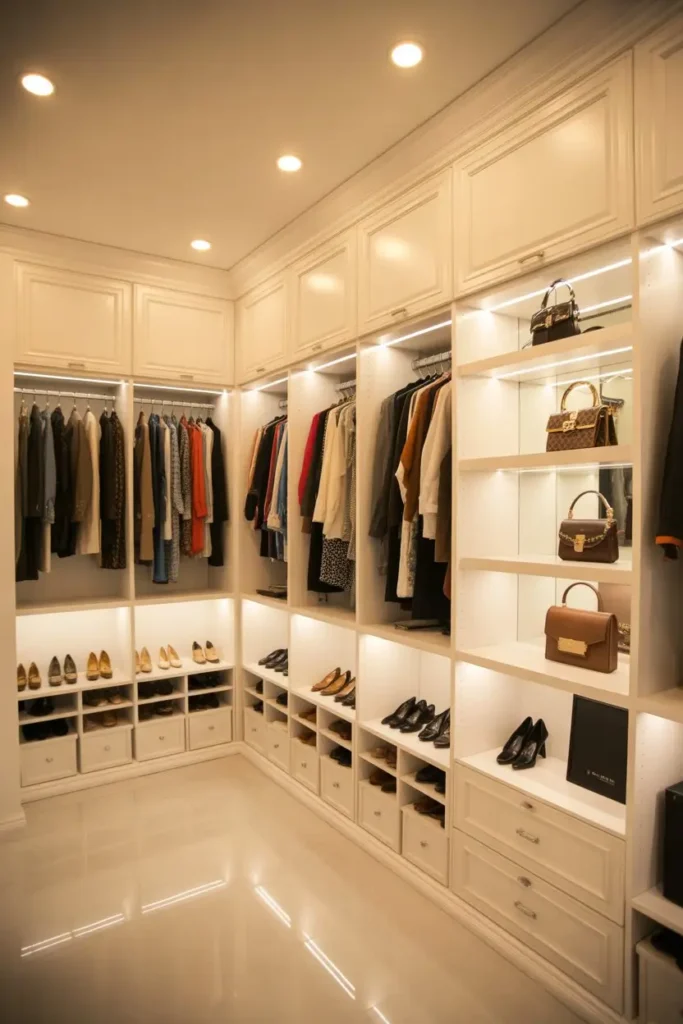
A dark closet makes finding clothes harder than it should be. Good lighting is one of the most overlooked upgrades, yet it makes the biggest difference. LED strips under shelves create even brightness, while recessed ceiling lights prevent shadows. Adding motion-sensor lights means your closet glows the moment you open the door, saving energy and time.
For a more luxurious feel, consider backlit shelves or a statement chandelier in a walk-in closet. Proper lighting also highlights your clothing, turning the space into more of a boutique experience. Many homeowners underestimate how much this small renovation can improve daily use, but once installed, it feels like an entirely new closet.
3. Sliding Doors for Easy Access
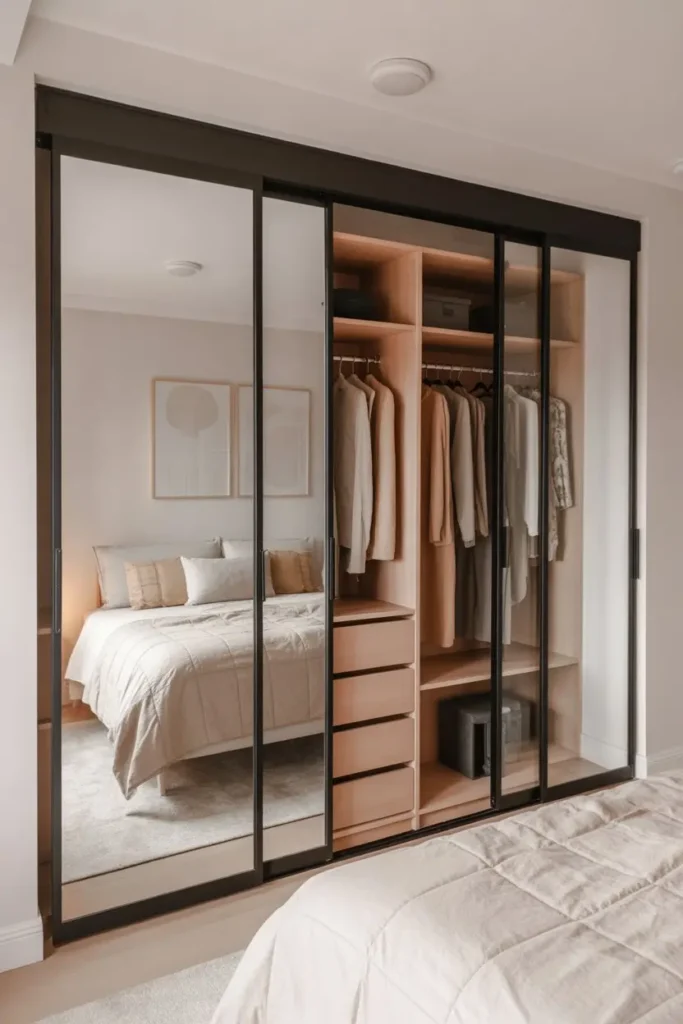
Traditional swing doors take up floor space and often block furniture or pathways. Replacing them with sliding or barn-style doors frees up the area in front of the closet and makes access more convenient. Sliding mirror doors also add a dual function, giving you a full-length view while expanding the sense of space.
For smaller bedrooms, this renovation is especially valuable. You gain usable square footage without sacrificing accessibility. If you prefer a modern touch, choose frameless glass or minimalist wooden sliders that blend seamlessly into the room’s design. This change may seem simple, but it can completely refresh both the closet and the bedroom.
4. Double Hanging Rods to Maximize Height
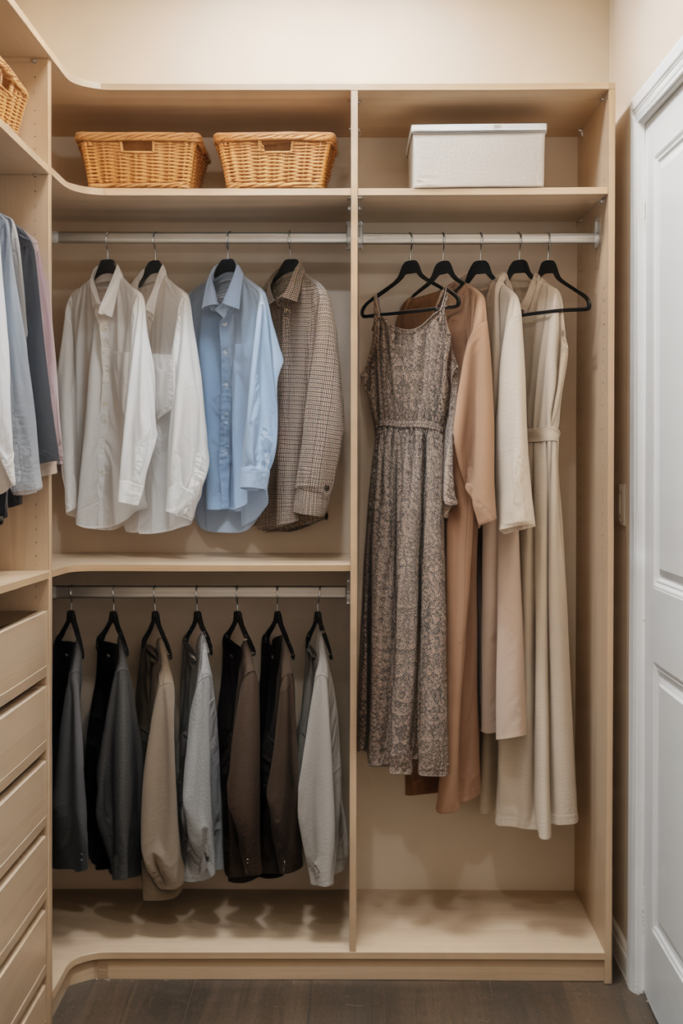
Most closets waste vertical space. By adding a second hanging rod, you can double the amount of storage in the same footprint. The top rod works well for shirts, jackets, and blouses, while the lower rod is perfect for pants or skirts. For taller items like coats or dresses, leave one section with a single rod to prevent wrinkling.
This upgrade is inexpensive but highly effective. It uses the closet’s height in a smart way, making it ideal for small closets that struggle with limited space. With careful planning, even a standard reach-in closet can feel like a mini walk-in with this adjustment.
5. Drawer Systems for Hidden Organization
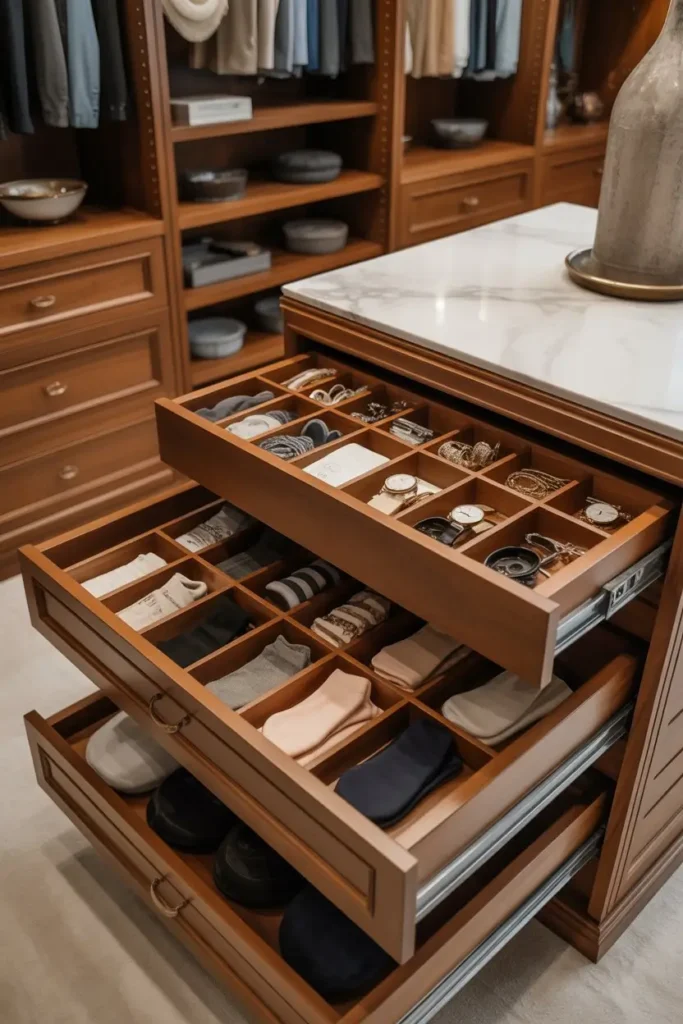
Not everything belongs on hangers or open shelves. Small items like socks, undergarments, or accessories are best stored in drawers. Adding a built-in drawer system creates order and keeps clutter out of sight. Soft-close mechanisms add a touch of quality, while dividers inside drawers allow you to separate smaller pieces.
Drawers also reduce the need for extra dressers in the bedroom, freeing up more floor space. In a walk-in closet, a central island with drawers on both sides works as both storage and a folding surface. This kind of renovation makes your closet not just a place to hang clothes, but a complete dressing station.
6. Shoe Walls for Clear Display
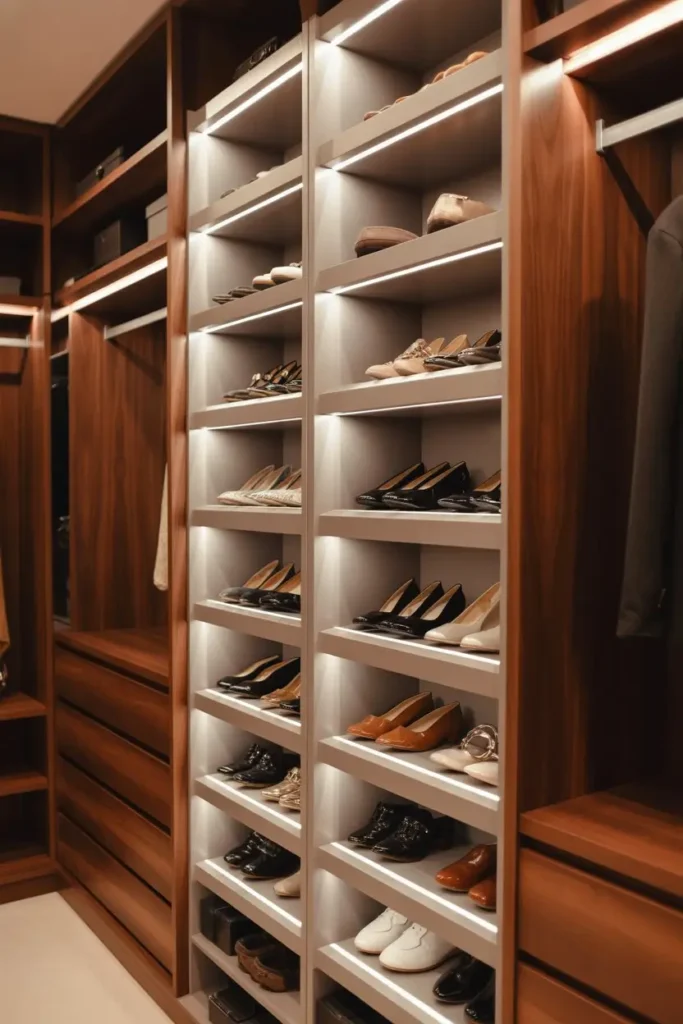
Shoes often end up in messy piles at the bottom of closets. A dedicated shoe wall solves this problem and adds style. Slanted shelves allow easy visibility, while cubbies keep pairs together. Adjustable shelving ensures the system grows with your collection, whether you wear flats, heels, or boots.
For tight spaces, vertical pull-out racks make use of narrow gaps. In larger closets, floor-to-ceiling shoe displays turn your footwear into a feature wall. This not only keeps shoes organized but also prevents damage, extending their lifespan.
7. Mirror Integration for Function and Style
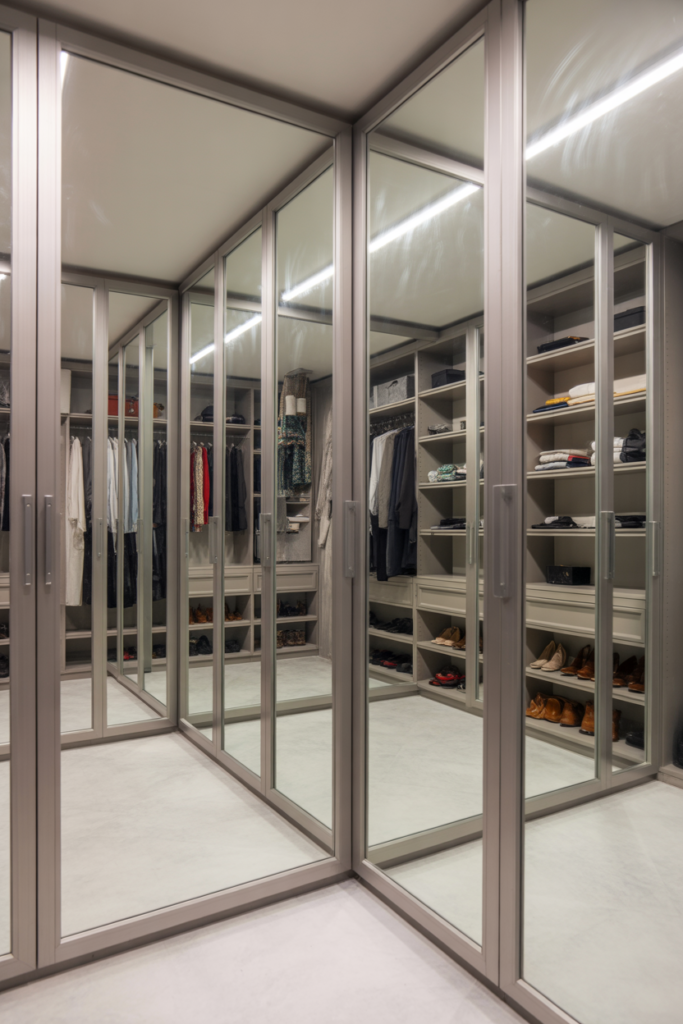
Mirrors do more than reflect your outfit. They also make a small closet feel larger and brighter. Adding mirrored panels to doors or inside walls gives the illusion of depth. A full-length mirror ensures you can check your look without leaving the closet, which streamlines morning routines.
For a seamless design, many custom closets include mirrors framed in the same finish as shelves or doors. This creates a unified and elegant appearance. Beyond practicality, mirrors add a sense of luxury that elevates the entire space.
8. Open Shelving for Quick Reach
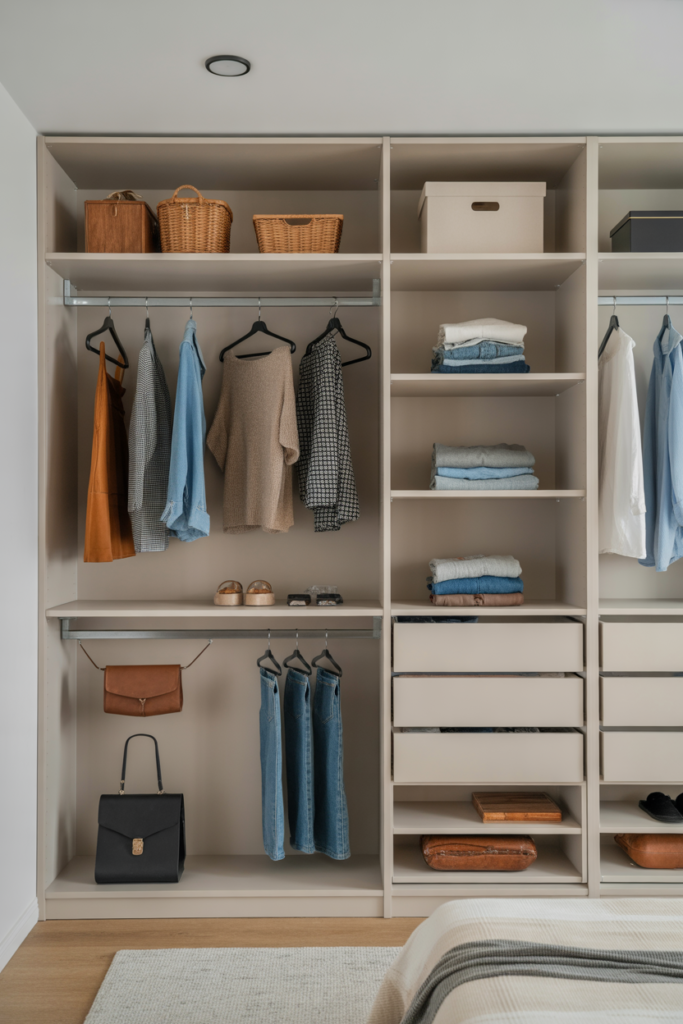
Open shelving is perfect for items you use daily. Folded sweaters, jeans, or handbags stay visible and within easy reach. Unlike closed storage, open shelves encourage you to stay organized because clutter becomes more noticeable.
The key is balance. Too many open shelves can make the closet look messy, so mix them with drawers or cabinets. Adjustable shelves give flexibility as your wardrobe changes over time. With the right placement, open shelving can act as both storage and display.
9. Hidden Storage for Seasonal Items
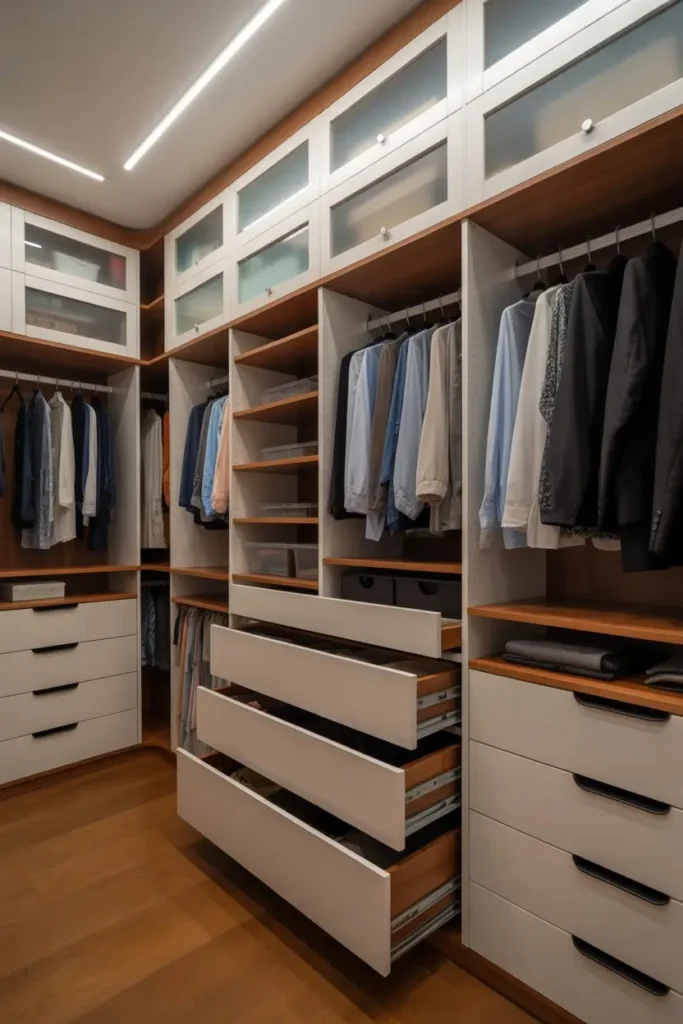
Closets often overflow because they hold items not in season. Hidden storage compartments help rotate your wardrobe without clutter. Deep drawers, pull-out bins, or overhead cabinets store winter coats in summer and light clothing in winter.
Some homeowners even design lift-up benches or ottomans inside large closets for concealed storage. This keeps the main area tidy while still giving access when needed. By creating zones for current and off-season items, your closet always feels manageable.
10. Walk-In Closet Expansion
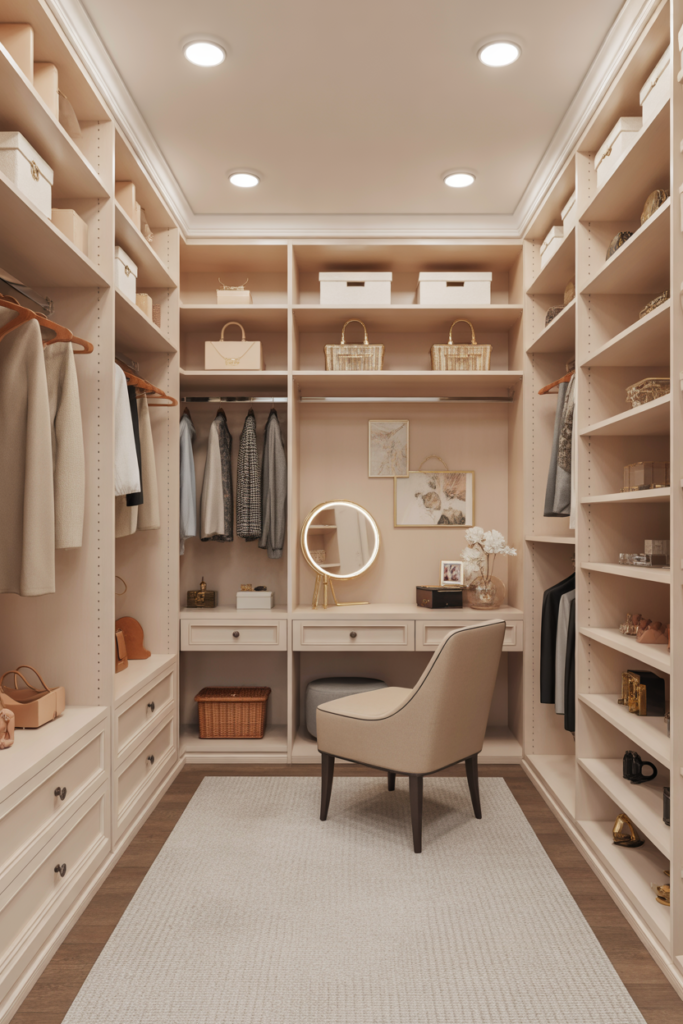
If space allows, expanding into a walk-in closet is one of the most impactful renovations. It turns clothing storage into a personal dressing room. With more square footage, you can add seating, vanity space, or even a display area for handbags and accessories.
Expanding might mean combining two smaller closets or borrowing space from an adjoining room. Though a larger project, the result is life-changing in terms of organization and luxury. A well-designed walk-in often becomes a standout feature that increases a home’s value.
11. Use Glass Doors for a Boutique Feel
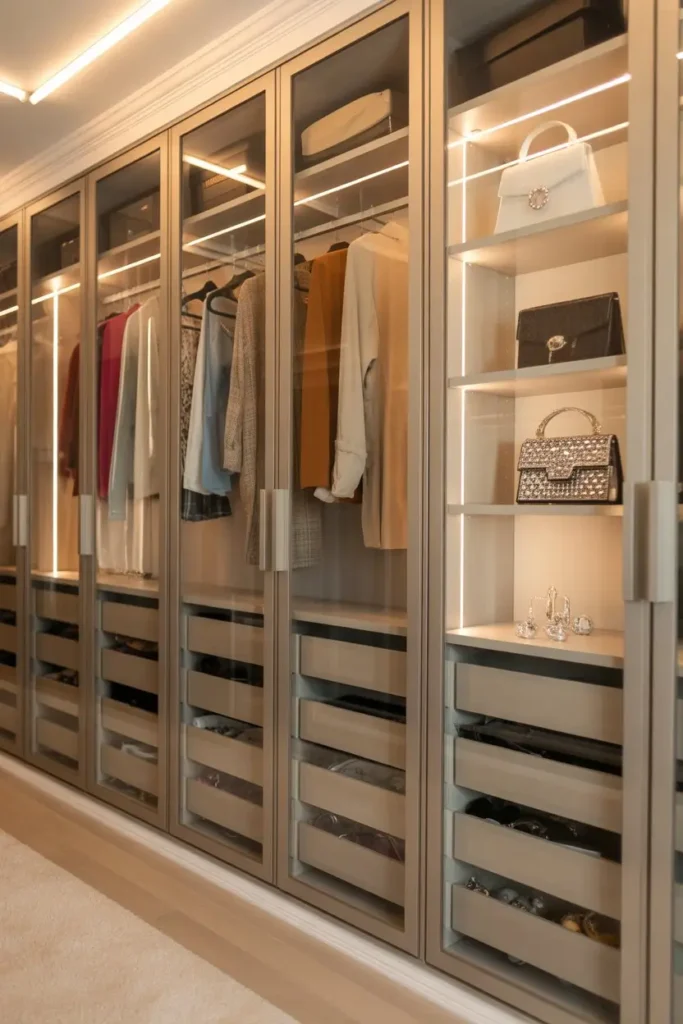
Glass-front cabinets or closet doors provide visibility without full exposure. Frosted glass gives a soft, elegant look while keeping some privacy. Clear glass works well if you keep items neatly arranged, as it creates a high-end boutique vibe.
This approach transforms clothing and accessories into part of the room’s design. For example, handbags and jewelry displayed behind glass look more like art than storage. Glass also reflects light, brightening the closet naturally.
12. Built-In Vanity or Dressing Station
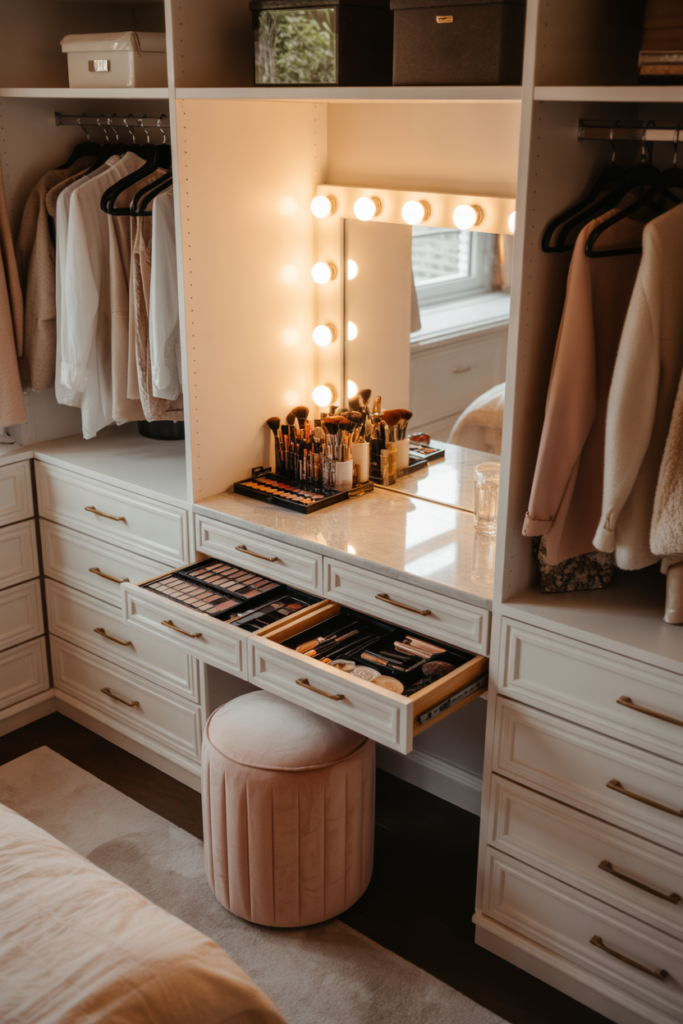
A closet isn’t only for clothes. By adding a small vanity, you create a space to get fully ready in one place. Drawers can store makeup, hair tools, or jewelry. A lighted mirror ensures perfect visibility, while a small stool keeps the setup compact.
This renovation reduces trips between bedroom and bathroom, saving time each day. For walk-in closets, a built-in vanity becomes a central feature that blends beauty and function. It also brings a sense of luxury without needing an entire extra room.
13. Smart Closet Technology
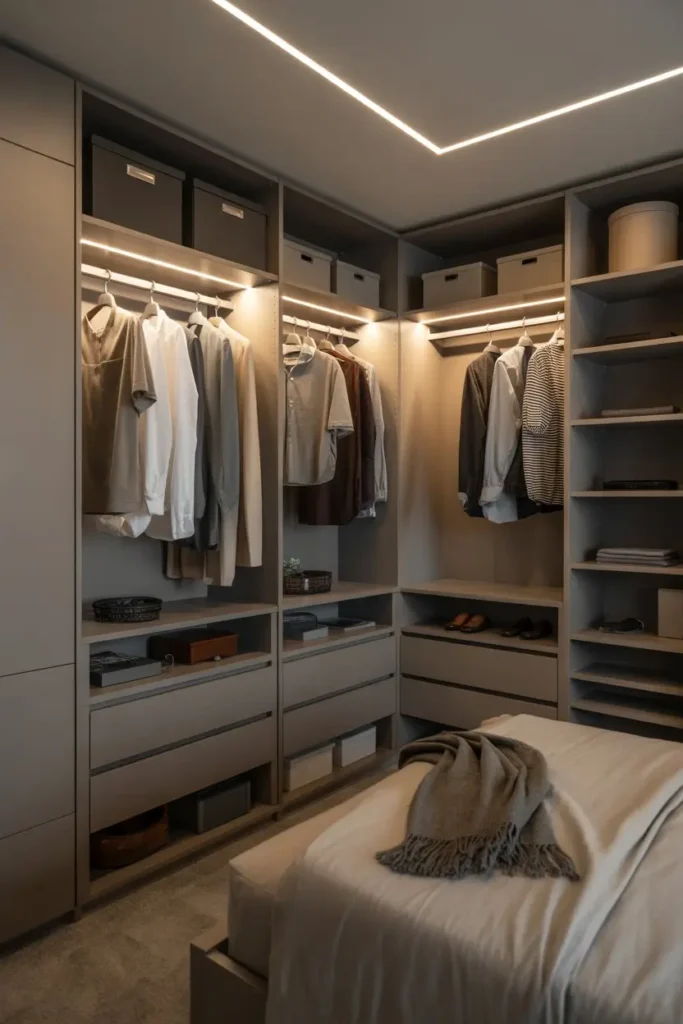
Today’s closets can be smarter than ever. Motion-sensor lights, automated rods that lower with a button, and even digital wardrobe apps that track outfits are now available. While not every homeowner needs advanced systems, even simple upgrades like remote-controlled lighting or climate control for preserving delicate fabrics can be valuable.
Technology in closets is not about showing off but about convenience. Imagine lights turning on automatically, or a dehumidifier keeping clothes fresh year-round. These upgrades ensure your closet works seamlessly with your lifestyle.
14. Add Seating for Comfort and Ease
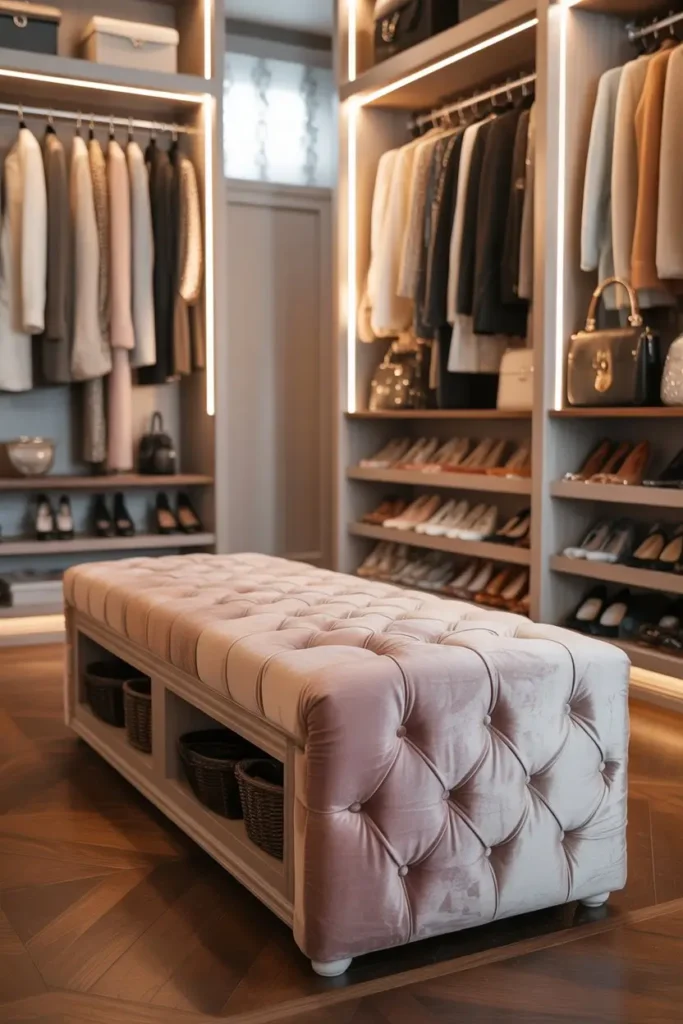
If your closet has the space, seating adds comfort and utility. A bench at the center provides a spot for putting on shoes or laying out outfits. Storage benches serve double duty, offering hidden compartments for less-used items.
In walk-in closets, seating creates a boutique-like atmosphere. Even in smaller spaces, a slim ottoman can fit without overwhelming the layout. This small addition improves how you interact with your closet daily.
15. Accent Finishes to Personalize the Space
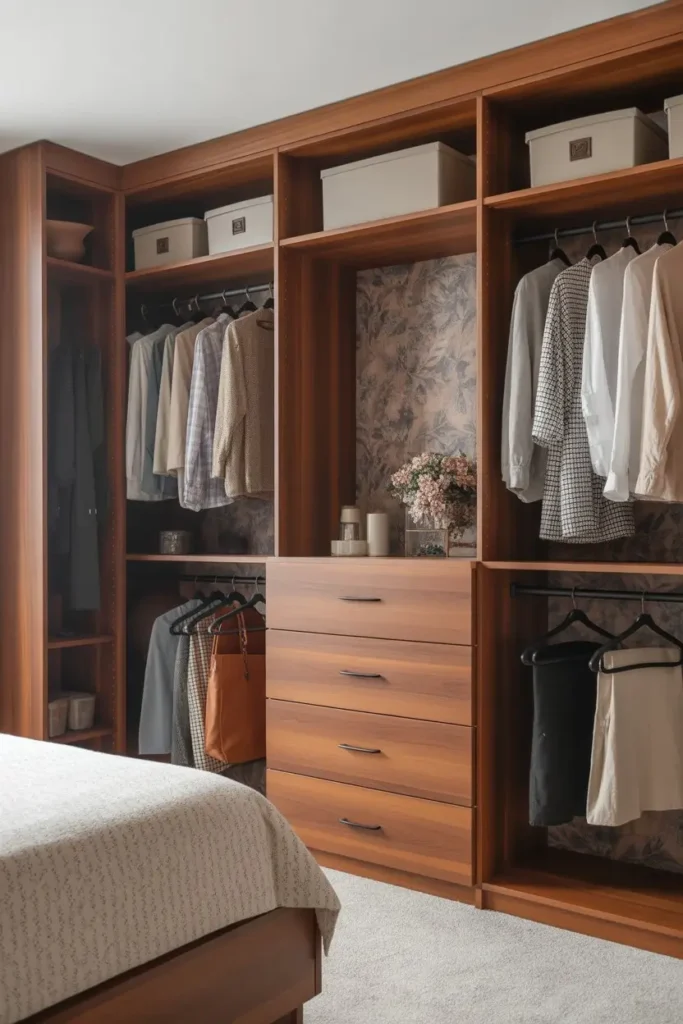
The final touch of any renovation is style. Beyond function, finishes set the tone of the closet. Woodgrain laminates add warmth, high-gloss white creates a modern look, and matte black hardware brings sophistication. Wallpaper on the back of shelves or bold paint colors add personality without cluttering the design.
Finishing details may seem minor, but they make the closet feel like part of the home rather than an afterthought. When storage solutions blend with personal taste, the space becomes enjoyable to use, not just practical.